HISTORY · ROME IN LAYERS
Rome in layers, read on foot.
Here history is not read in a queue in front of a monument, but vertically. You walk above several cities, one stacked on the next, and sometimes a few steps down are enough to change century.
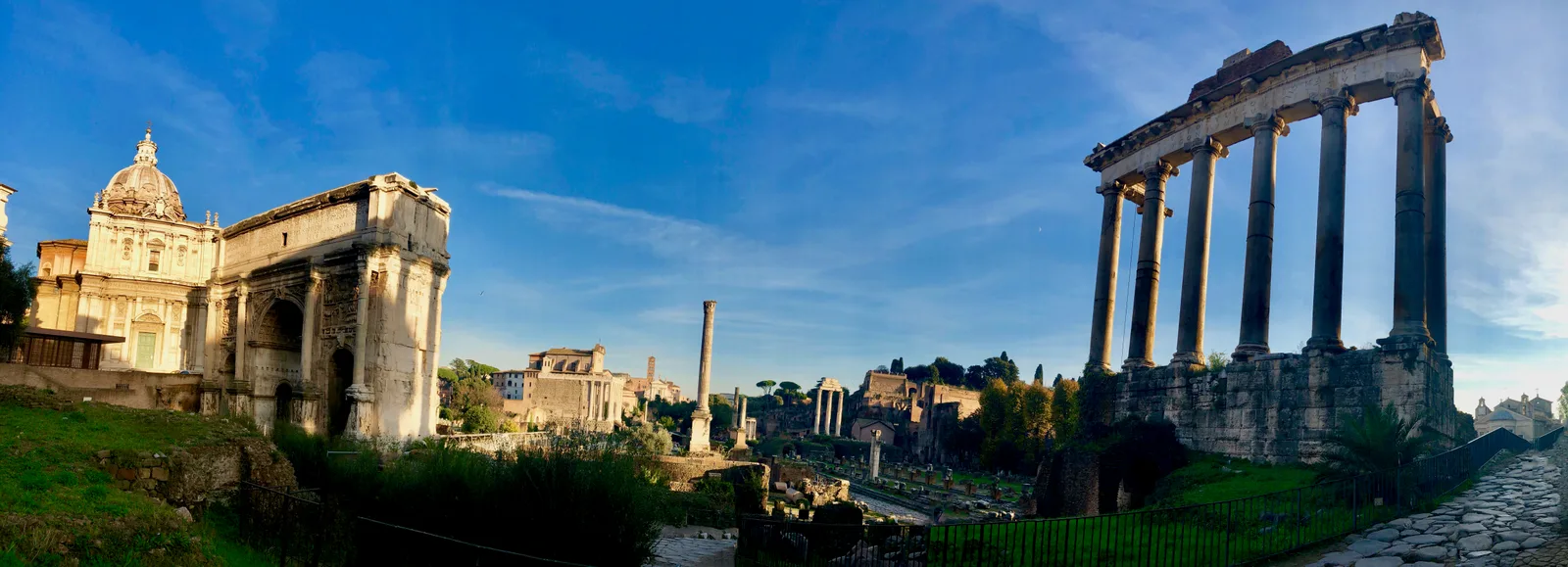
Foto: Sonse / Wikimedia Commons (CC BY 2.0)
Rome does not preserve its history: you walk on top of it. Centuries of demolition, rebuilding, debris and the floods of the Tevere (Tiber) raised the level of the city, until ancient Rome ended up several meters below today's street. There is no single figure valid everywhere, the difference changes block by block, but the principle holds: read the city from the top down.
This is history lived like a resident, not a tourist: not a list of monuments, but a way of walking. The very Christian catacombs that open just outside the gates date to the 2nd century, and on their own they measure how much city lies beneath your feet. We take you where the layers stay visible in the open air, where a single block has been excavated like a cross-section, and along the roads and the river that have held the city up for more than two thousand years.
FORO AND PALATINO · IN THE OPEN AIR
The layers you can see standing up.
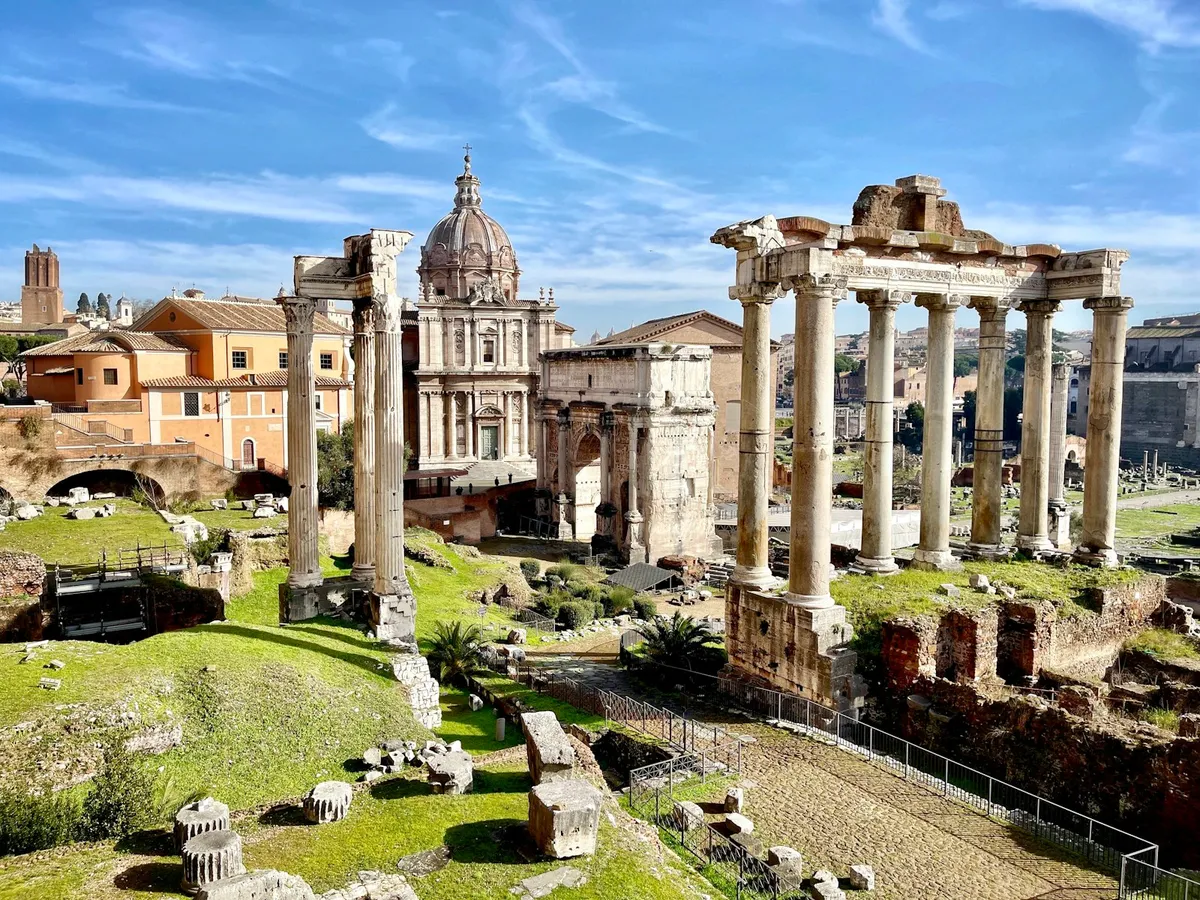
The place where the layering shows best is the most obvious one, which is exactly why people cross it at a run. The Foro Romano (Roman Forum) was paved in the 7th century BC, after a marsh had been drained, and for over a millennium it gathered republican and imperial buildings side by side. You walk on a square that is also the floor plan of a thousand years of public life.
Above it, the Palatino (Palatine Hill) holds the oldest core of the city. Here Augustus set his residence and the emperors followed: the palace of Domitian divides into the ceremonial Domus Flavia, the private Domus Augustana and the Stadium. The word "palace" comes from the place name Palatium. The combined Colosseo, Foro Romano and Palatino ticket gives one entry to each site and is valid for 24 hours; the Forum Pass SUPER covers the Foro, Palatino and Fori Imperiali without the Colosseo. Booking is by timed slot, run by the Parco archeologico del Colosseo, and opens thirty days ahead.
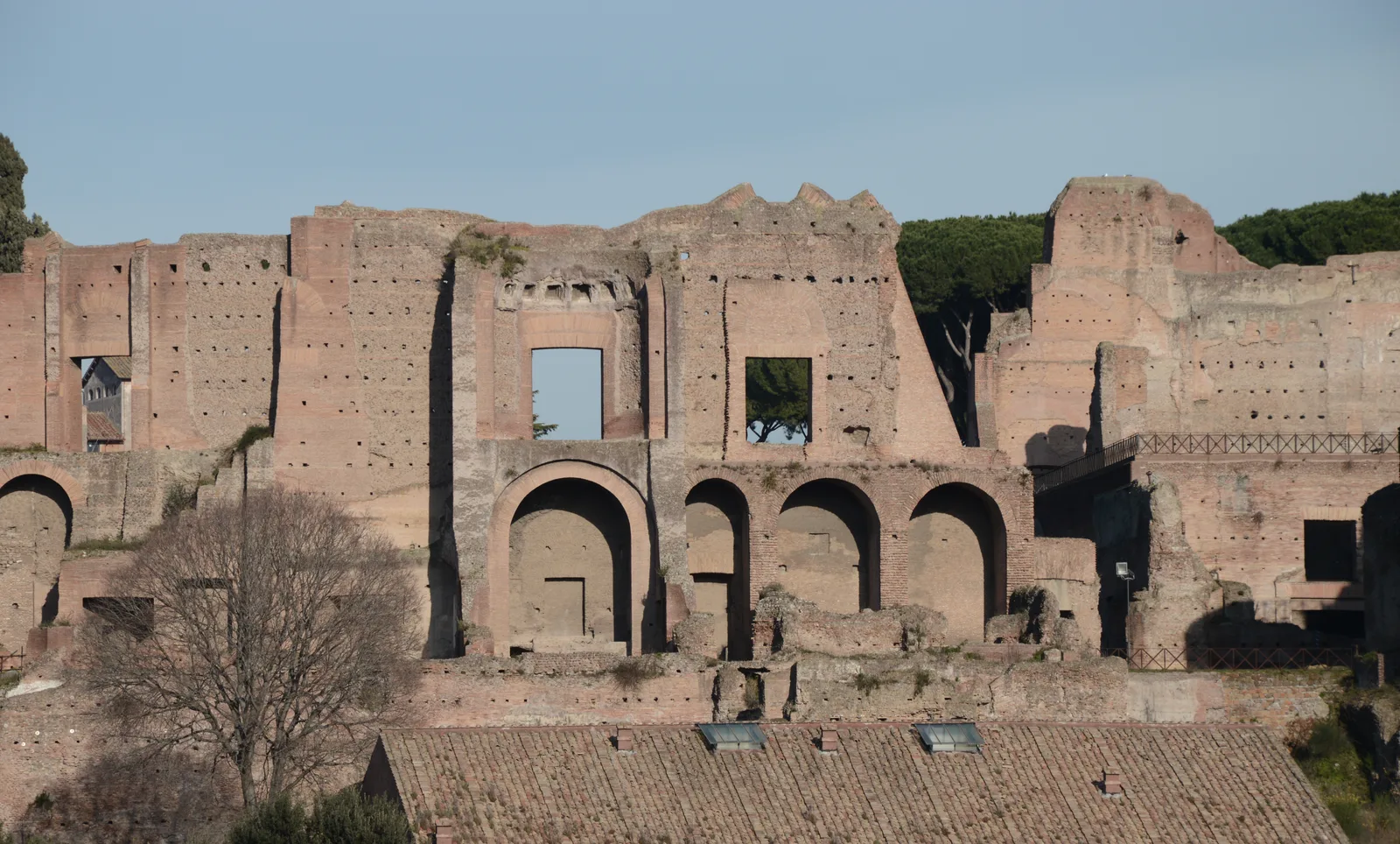
Foto: Livioandronico2013 / Wikimedia Commons (CC BY-SA 4.0)
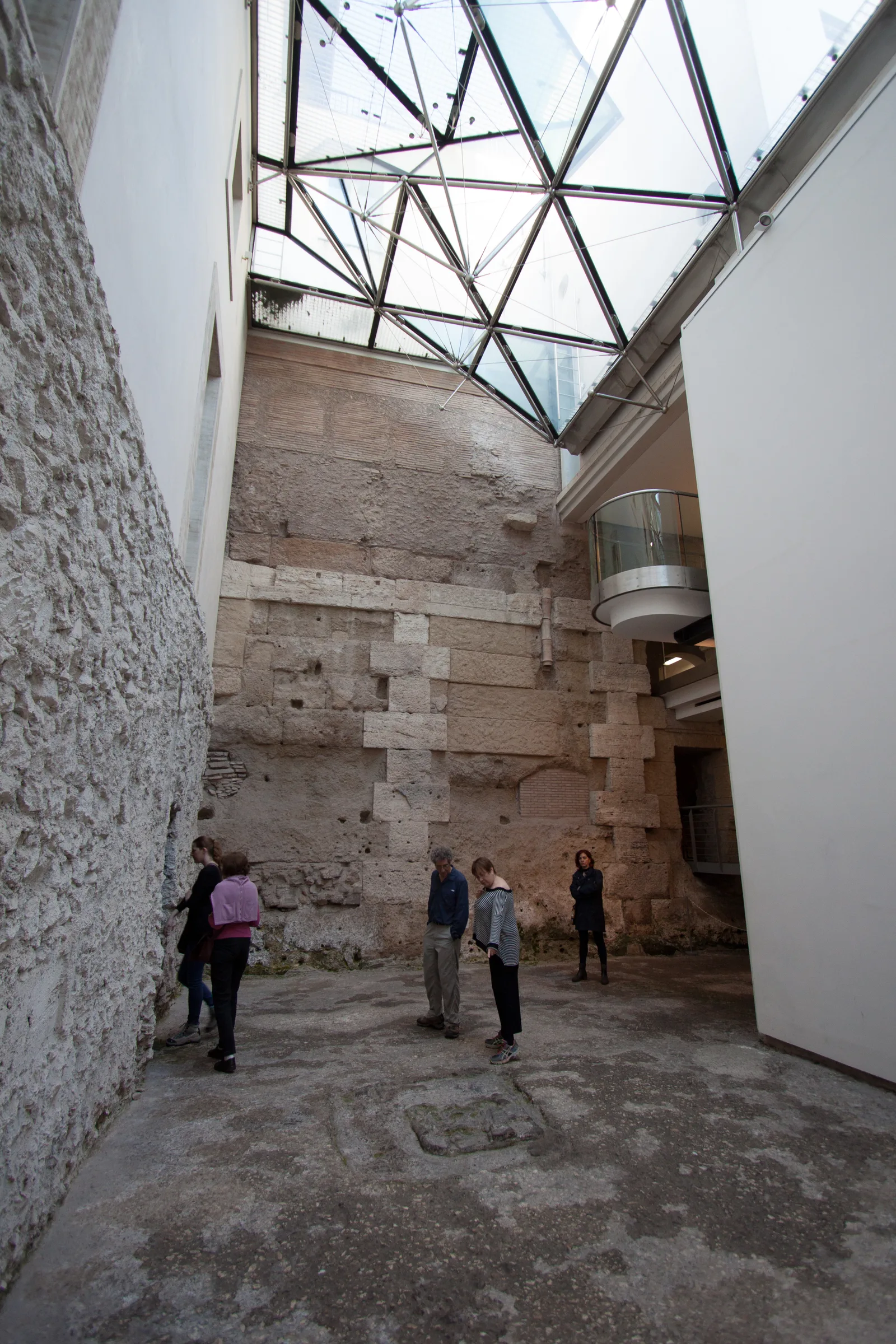
Foto: Szilas / Wikimedia Commons (Public domain)
CRYPTA BALBI · A BLOCK IN CROSS-SECTION
A city block excavated like a cross-section.
If the great monuments wear you out, go where almost no one goes. At Via delle Botteghe Oscure 31, the Crypta Balbi grew out of a large portico attached to the theatre commissioned by Lucius Cornelius Balbus in 13 BC, in the Campo Marzio. Since then the block has never been abandoned: it was built over, century after century.
Today it is a museum of urban archaeology, one of the four sites of the Museo Nazionale Romano, and it traces the evolution of a single block from antiquity to the Middle Ages all the way to the twentieth century. It is the best place in Rome to see, with your own eyes, the shift from antiquity to the Middle Ages, those centuries that stay abstract elsewhere. It stays uncrowded: here, you read the history almost on your own.
APPIA ANTICA · THE STONE PAVING
Walking the Regina Viarum.
Outside the center, history becomes a road you can travel with your own steps. The Via Appia was begun in 312 BC by the censor Appio Claudio Cieco (Appius Claudius Caecus) to link Rome to Capua, and the ancients called it the Regina Viarum, the queen of roads. Along several stretches the original paving survives, great basalt slabs where you can still see the ruts left by carts. Walking and cycling remain the intended way to travel it, inside the Parco archeologico dell'Appia Antica.
Beneath your feet runs another city. The Christian catacombs, burial galleries dating to the 2nd century, open along the Appia and can only be visited on a guided tour: San Callisto (closed Wednesday), Domitilla (closed Tuesday), San Sebastiano. Before you set out, it is worth checking hours and the closing day on the official sites, because they change.
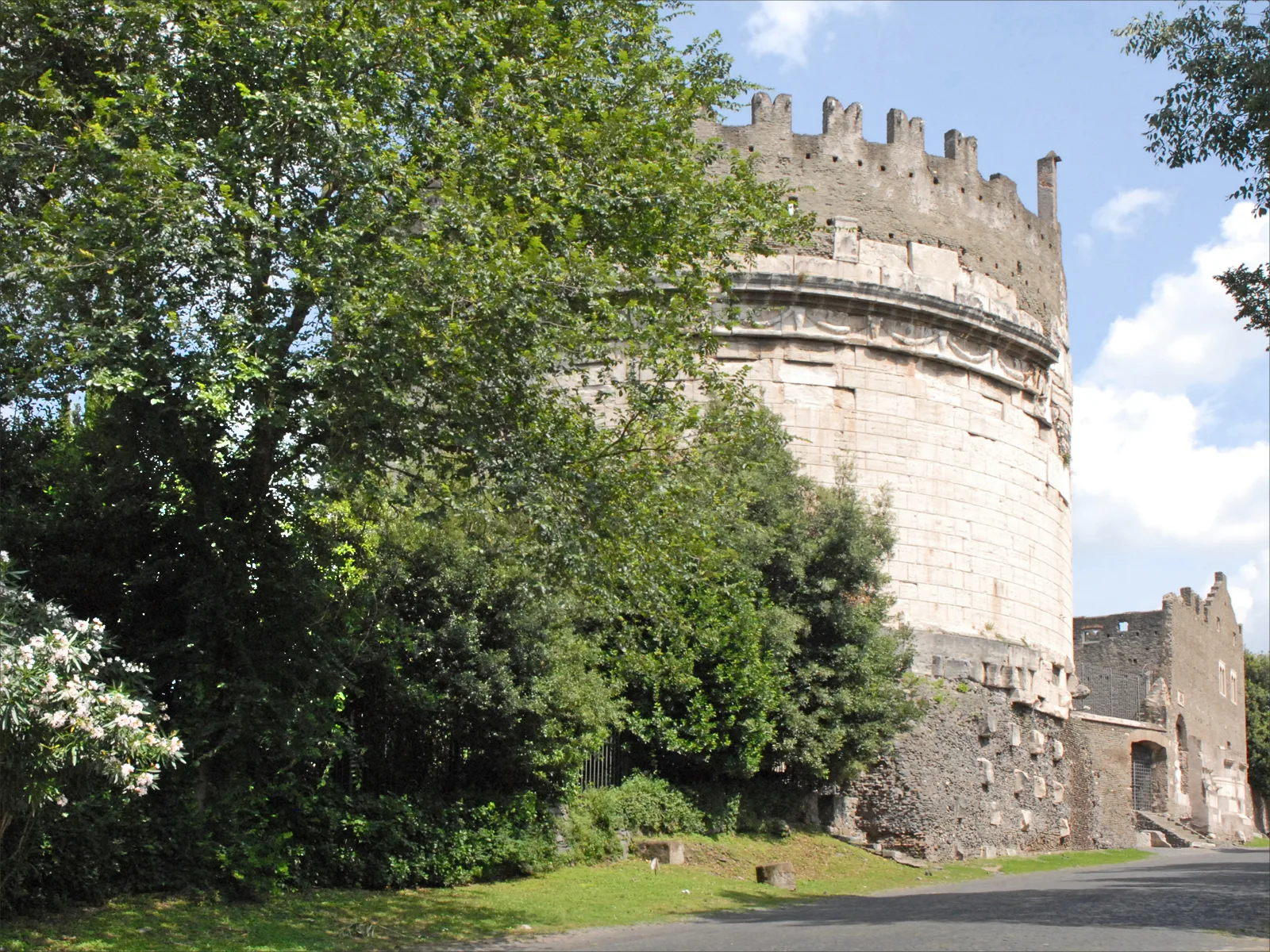
Foto: Jean-Pierre Dalbéra / Wikimedia Commons (CC BY 2.0)
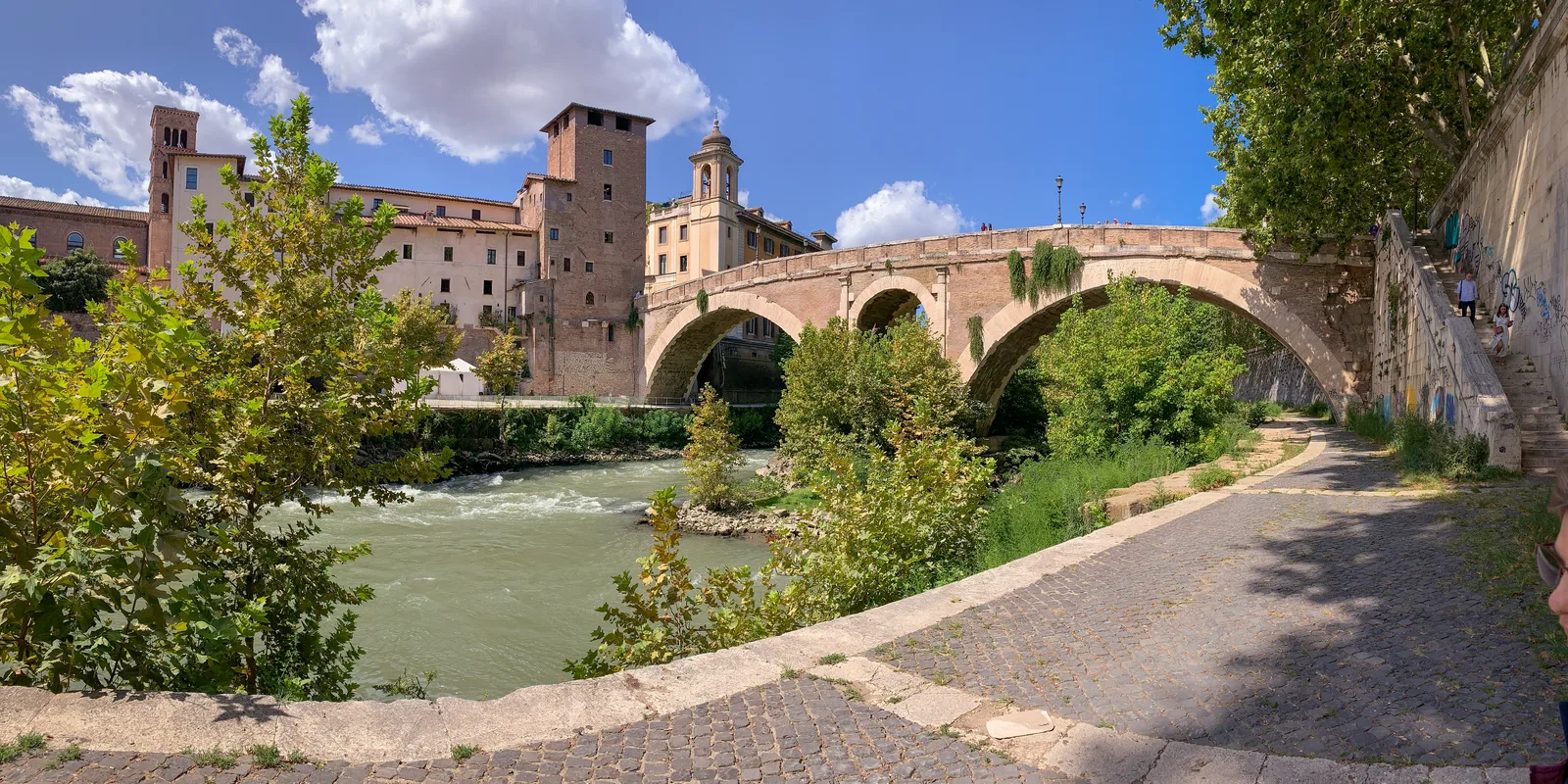
Foto: Nicholas Hartmann / Wikimedia Commons (CC BY-SA 4.0)
ISOLA TIBERINA · THE STONE SHIP
The stone ship in the middle of the river.
In the middle of the Tevere, a small island was turned into a ship. In the first half of the 1st century BC the Isola Tiberina was given monumental form in travertine, shaped like a vessel, and you can still make out its prow, with the reliefs of Aesculapius and the serpent. It is not a whim: on the southern tip stood the Temple of Aesculapius, the god of medicine, where the church of San Bartolomeo all'Isola stands today.
The calling to care has never been broken: the Fatebenefratelli hospital, founded in 1583, carries on a trade more than two thousand years old on this island. You reach it by the Ponte Fabricio, of 62 BC, the oldest Roman bridge in Rome preserved in its original form. You cross it just as they crossed it then.
MURAGLIONI · THE MODERN LAYER
The most recent layer underfoot.
Even the riverside you stroll along is a layer, and one of the youngest. The Tevere muraglioni (the embankment walls) and the Lungotevere came after the disastrous flood of 28 December 1870: the works opened in 1876 and were largely completed by 1926. The riverbed was straightened and widened to around a hundred meters, to rein in a river that for centuries had raised the level of the city with every overflow.
It is the same river that had buried ancient Rome under repeated coats of mud, now held between high travertine banks. When you walk along the Lungotevere you stand above the last decision taken about this layering: no longer let the city rise from the water, but fix its level. From here, among other things, you see all the layers of this guide return: the river, the Isola Tiberina with its prow, and just beyond, the valley of the Foro. This too, in Rome, is a chapter of history to read on foot.
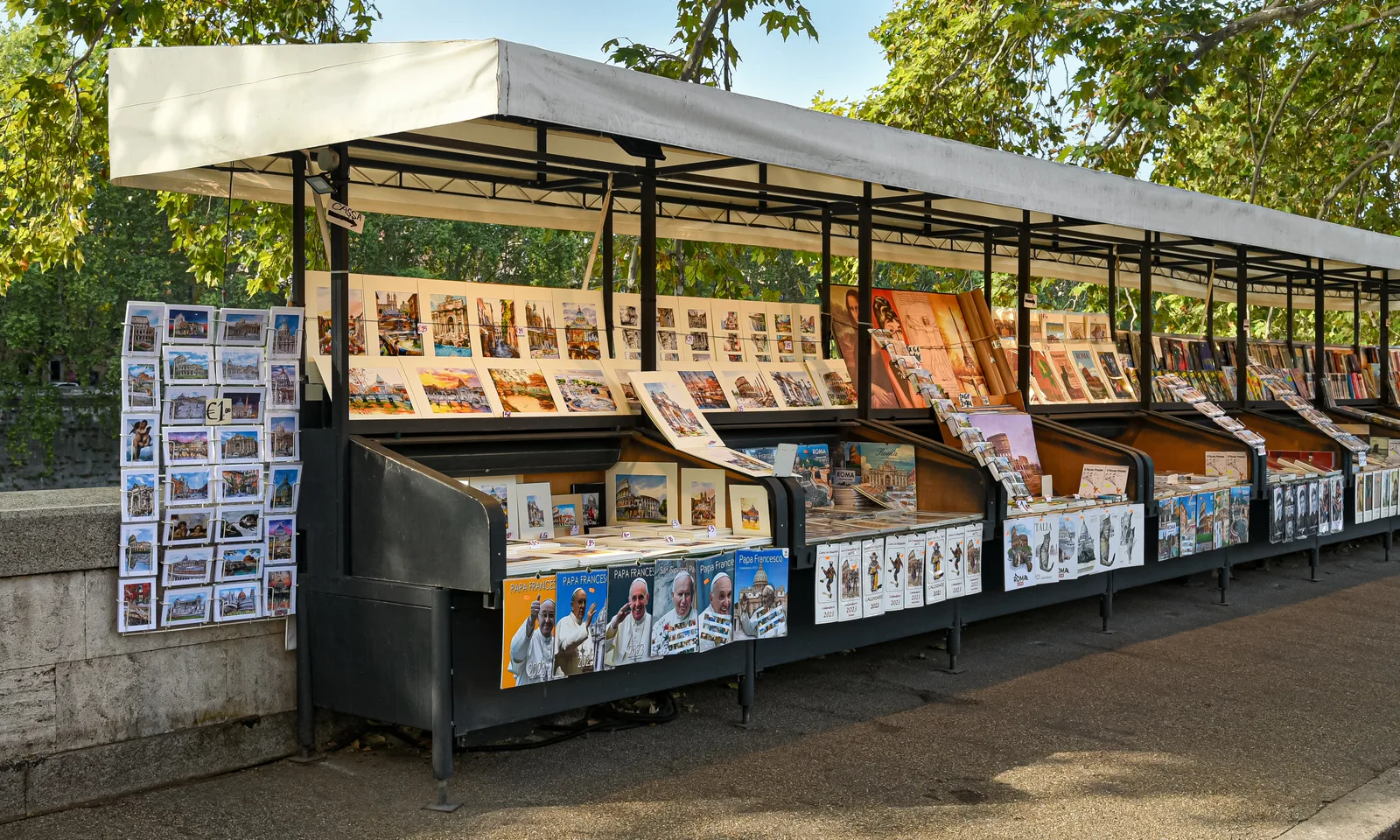
Foto: Jorge Franganillo / Wikimedia Commons (CC BY 2.0)
FREQUENTLY ASKED QUESTIONS
Rome's history, in brief.
Why is ancient Rome below today's street level?
Centuries of demolition, rebuilding, debris and the repeated floods of the Tevere (Tiber) raised the level of the city. Ancient Rome therefore lies several meters below the modern street, though there is no single figure valid everywhere: the difference changes from place to place.
How do you visit the Foro Romano and Palatino on one ticket?
The combined Colosseo, Foro Romano and Palatino ticket gives one entry to each site and is valid for 24 hours. The Forum Pass SUPER covers the Foro, Palatino and Fori Imperiali without the Colosseo. Booking is by timed slot and opens thirty days ahead, on the official ticketing of the Parco archeologico del Colosseo.
What is the Crypta Balbi and why is it worth a visit?
The Crypta Balbi, at Via delle Botteghe Oscure 31, is one of the sites of the Museo Nazionale Romano. It traces the evolution of a single city block from antiquity to the Middle Ages to the twentieth century, and it is the best place to read the shift from antiquity to the Middle Ages. It stays uncrowded compared with the major monuments.
Can you still walk on the original paving of the Via Appia?
Yes. The Via Appia, begun in 312 BC by Appio Claudio Cieco and known as the Regina Viarum, keeps its original basalt-slab paving along several stretches, with the ruts left by carts. Walking and cycling are the intended way to travel it, inside the Parco archeologico dell'Appia Antica.
How do you visit the catacombs along the Appia Antica?
The Christian catacombs, burial galleries dating to the 2nd century, can only be visited on a guided tour. Along the Appia there are San Callisto (closed Wednesday), Domitilla (closed Tuesday) and San Sebastiano. It is worth checking hours and the closing day on the official sites before you set out.
What is the oldest bridge in Rome and how does the Isola Tiberina fit in?
The Ponte Fabricio, of 62 BC, is the oldest Roman bridge in Rome preserved in its original form and links the Isola Tiberina to the bank. The island was given monumental form in travertine, shaped like a ship, in the first half of the 1st century BC, and its prow is still visible.
THE GRAND TOUR, FROM ROME
History is the first stop of the stay.
Rome opens the Civis Grand Tour. Reading the city in layers (on foot, walking over many eras) is easier when you stay inside its living fabric. Discover the two Rome addresses and the Civis Passport, and choose where to set out from.