ART · ROME, JUST STEPS AWAY
Art in Rome, just steps away.
The masterpieces aren't all behind a ticket. Often they sit behind a church door, free to enter, far from the queue.
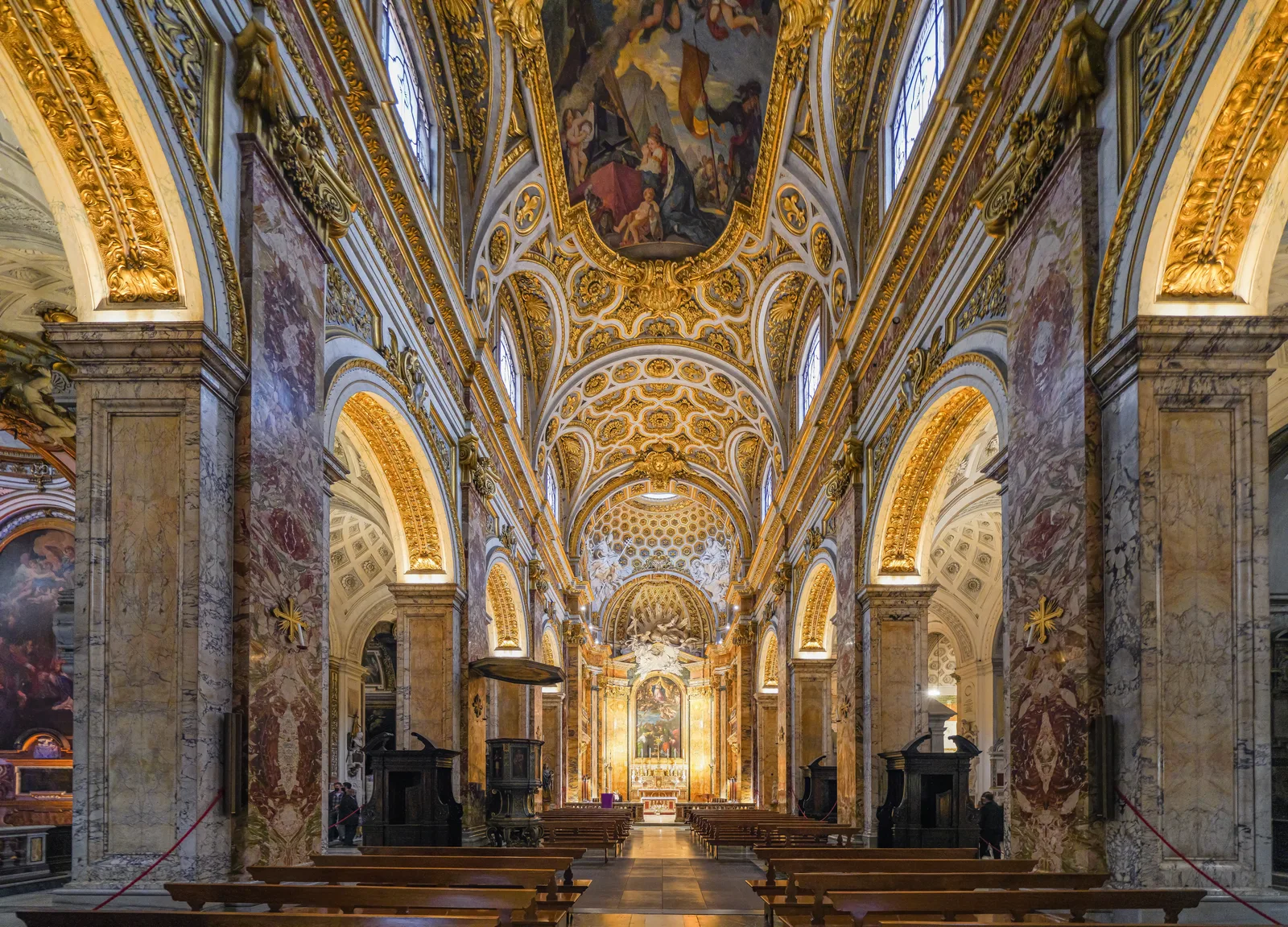
Foto: Paris Orlando / Wikimedia Commons (CC BY-SA 4.0)
Rome is a museum without walls, and much of that museum asks for no ticket. Canvases that would mean hours of queuing elsewhere hang here in a neighborhood church, open every day, which you step into the way you would to get out of the sun.
This is art lived like a local, not like a tourist: a selection you can reach on foot, with the honest detail on what is truly free, what has to be booked, and where the visitors never reach.
CARAVAGGIO · FOR FREE
Caravaggio, three stops on foot.
Three churches in the historic center hold the finest Caravaggio in Rome, and not one charges for entry. In San Luigi dei Francesi, the Cappella Contarelli keeps the St Matthew cycle: the Vocazione, the Martirio, San Matteo e l'angelo, painted between 1599 and 1602, the public debut that changed painting. A few steps away, in Santa Maria del Popolo, the Cappella Cerasi sets the Crocifissione di San Pietro beside the Conversione di San Paolo.
Closing the trio is Sant'Agostino, near Piazza Navona, with the Madonna dei Pellegrini: the realism of the pilgrims' dirty feet, which scandalised his own day. A practical note no tourist guide gives you: in the chapels, the light on the canvases often switches on with a one-euro coin. Keep a few in your pocket, and arrive outside service times, when the churches close to visitors.
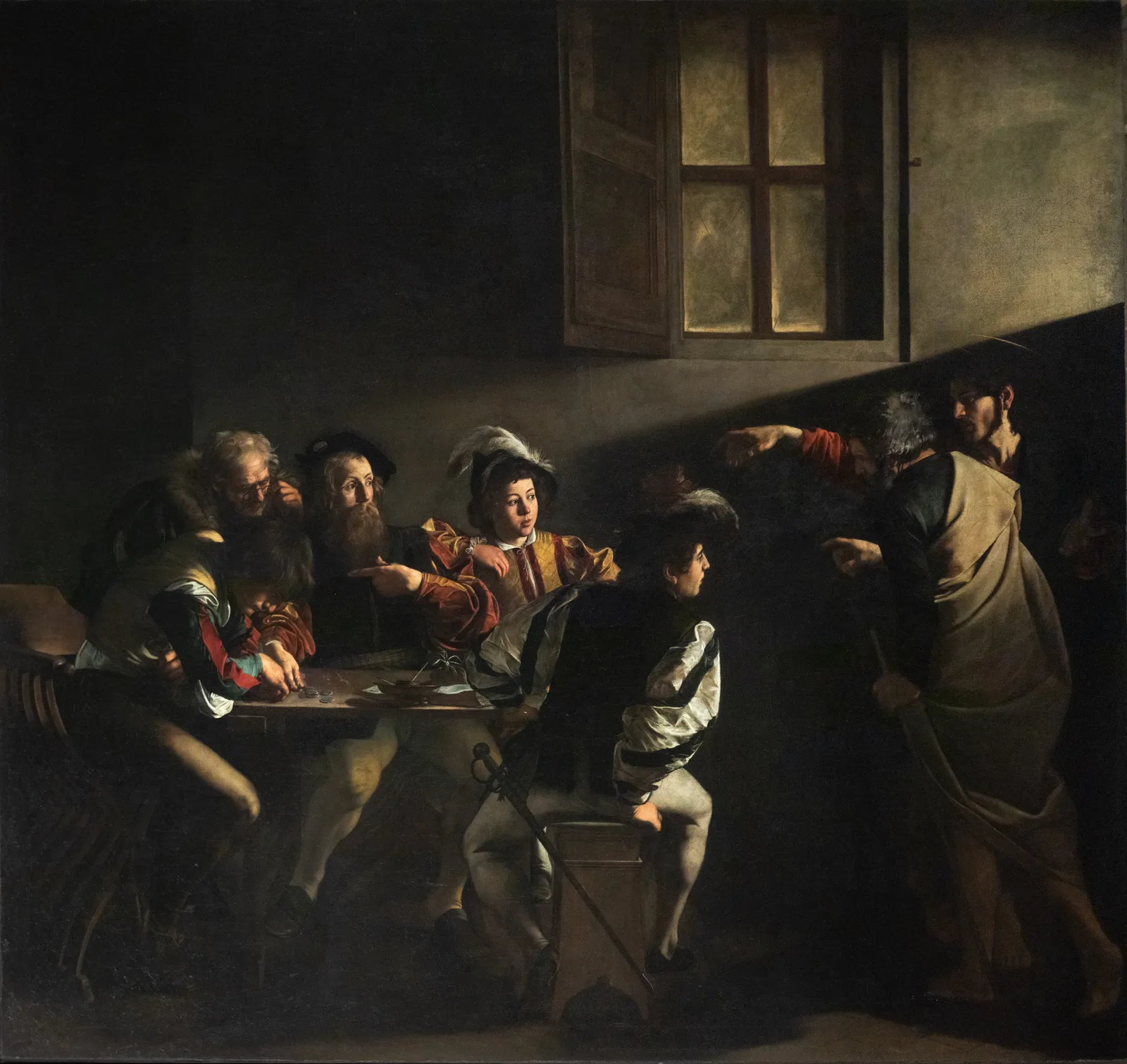
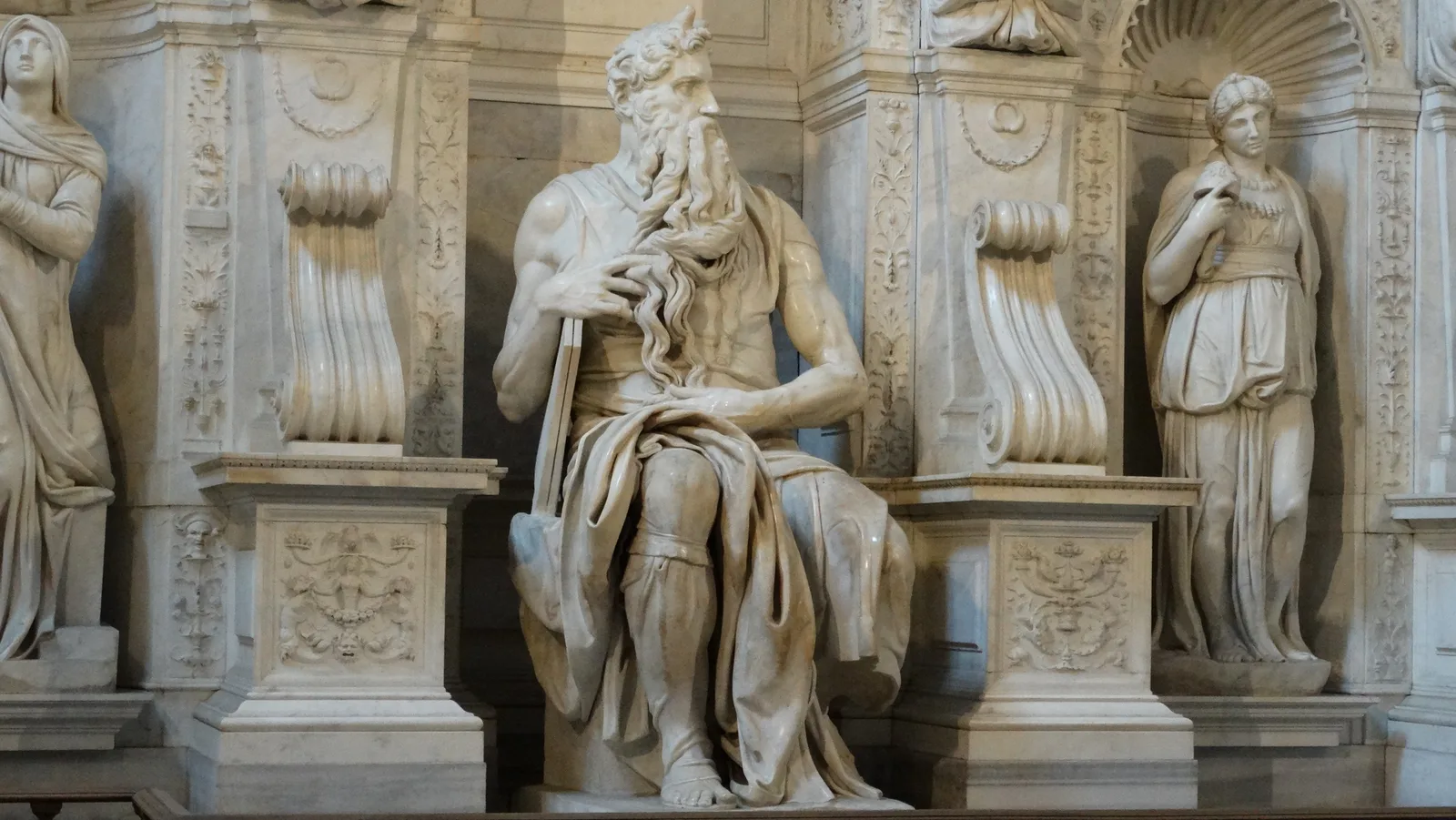
Foto: Luciano Tronati / Wikimedia Commons (CC BY-SA 4.0)
MICHELANGELO · MONTI
The Mosè, on the hill of Monti.
Climb up toward the Monti district and you will find San Pietro in Vincoli, home to the Mosè di Michelangelo. It was meant to be the centrepiece of the monumental tomb of Pope Giulio II, a project that cost Michelangelo decades and was never finished as he had imagined it. What remains is a seated figure, horns on its brow and a beard slipping through its fingers: tension held in the marble. Entry is free.
It is the right pause to slot into a walk from the Fori and the Colosseo, a few minutes away on foot. Monti all around stays one of the liveliest districts in the center: workshops, little staircases, local people, not a stage set for passers-by.
BERNINI · PORTA PIA
Bernini without a ticket: the Estasi.
In Santa Maria della Vittoria, on Via XX Settembre, the Cappella Cornaro stages the Estasi di Santa Teresa by Gian Lorenzo Bernini, carved between 1647 and 1652. Bernini built it like a stage: the saint thrown back on the cloud, the angel, the light dropping from above, and along the sides the patrons watching from marble boxes, as if at the theatre. Entry is free, an offering is welcome.
For anyone staying at the Lilium Boutique Hotel, it is the walk from your doorstep: the property is on that same Via XX Settembre, at Porta Pia. One of the most intense works of Roman Baroque, reachable on foot along the street.
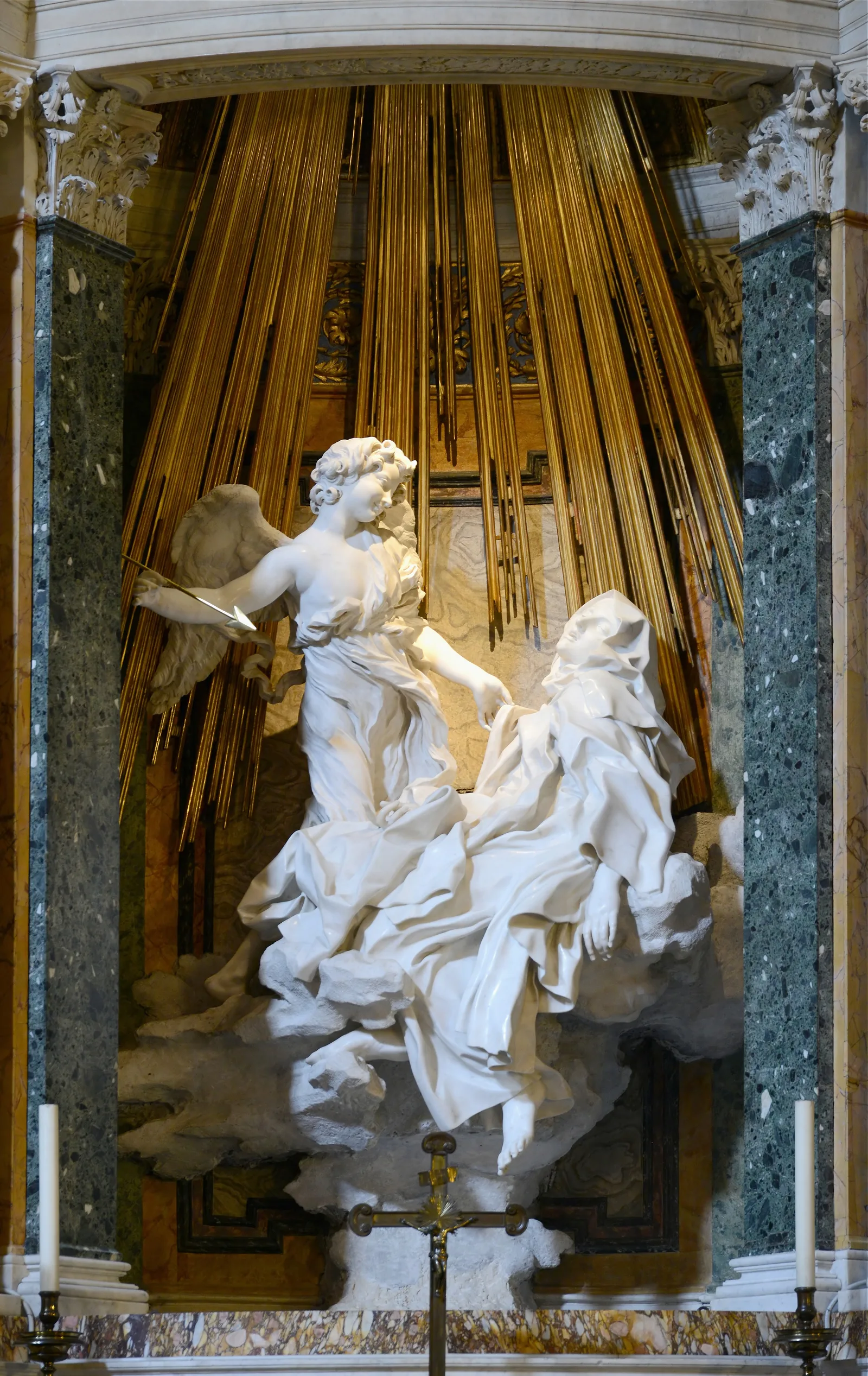
Foto: Alvesgaspar / Wikimedia Commons (CC BY-SA 4.0)
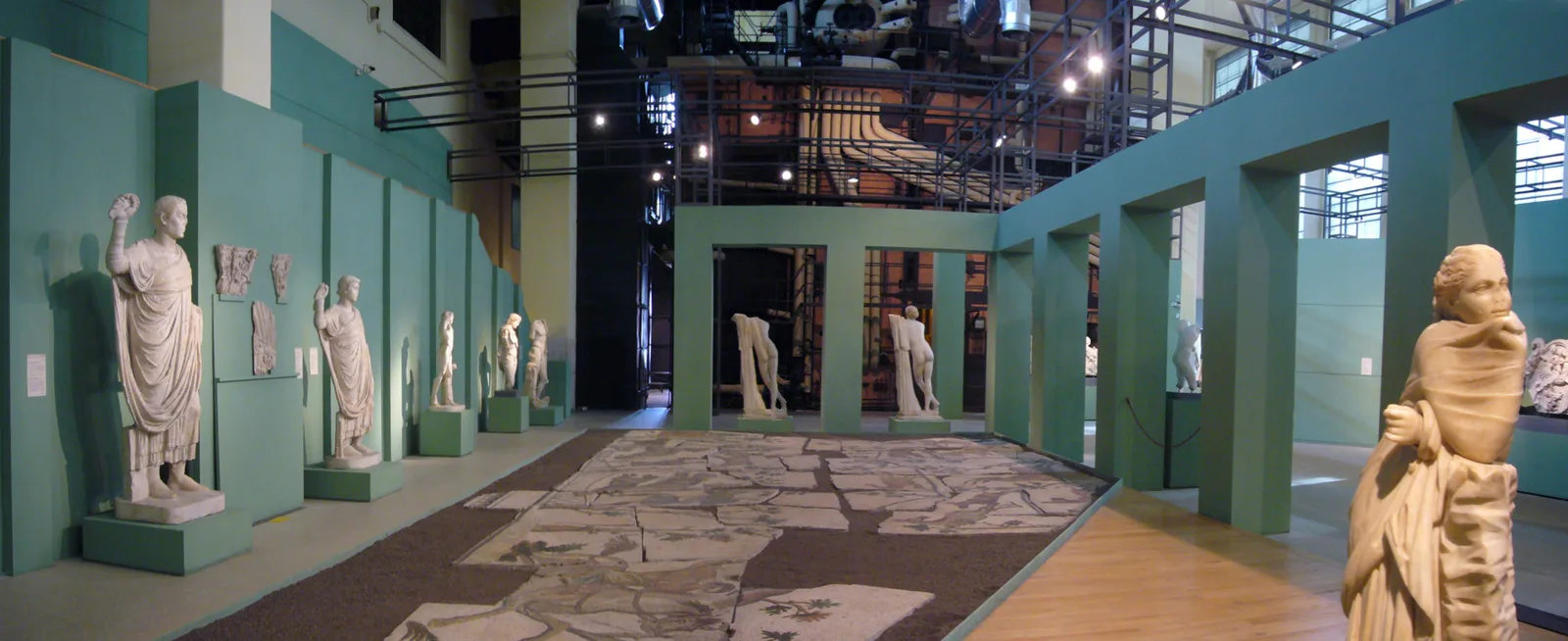
Foto: Lalupa / Wikimedia Commons (CC BY-SA 2.5)
MUSEUMS · PAST THE QUEUE
The museums the tourists skip.
The queues always form in the same places. Meanwhile, a short distance off, some of the city's most beautiful collections stay half-empty. The Galleria Doria Pamphilj, on the Corso, is a private collection still lived in by the family: you move through the rooms like a guest, rarely in the crush.
A stone's throw from Navona, Palazzo Altemps gathers the Ludovisi collection of ancient sculpture (the Trono Ludovisi, the Galata suicida) in a quiet Renaissance palazzo. And in Ostiense, the Centrale Montemartini shows classical statues among the turbines of an old power station: imperial marbles and black machinery, a contrast no other Roman museum offers you.
SAN CLEMENTE · LAYERS
Going down through time: San Clemente.
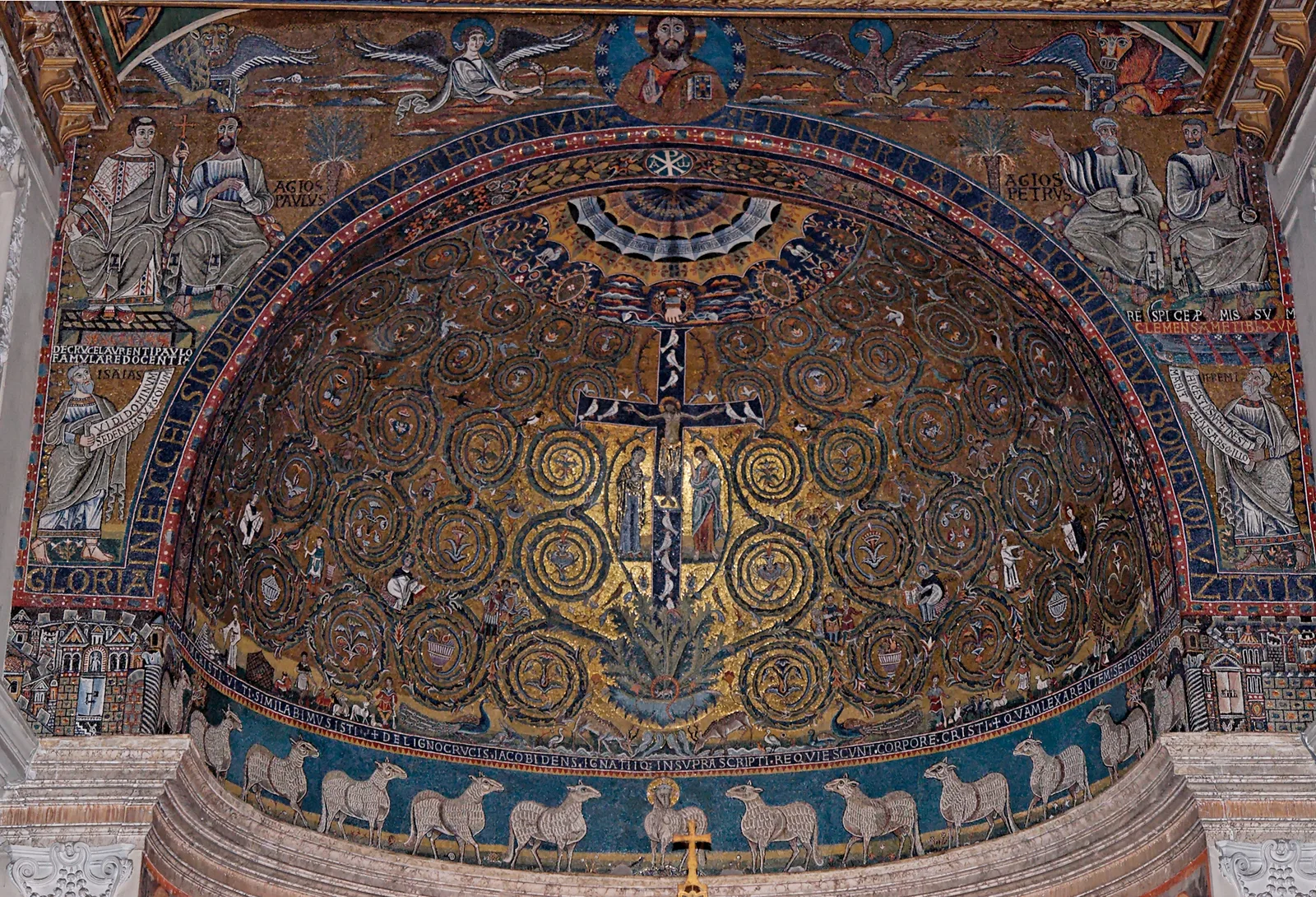
Few places tell Rome the way the Basilica di San Clemente does, near the Colosseo. At ground level there is the 12th-century medieval basilica, with its apse mosaic: entry is free. But below, the church keeps going downward.
You descend to a 4th-century early-Christian basilica, and deeper still to a 2nd-century mithraeum with a Roman domus: three eras stacked one above the other, until you hear the water of an ancient spring. The underground excavations are visited with a ticket and a reservation: the history of Rome, read vertically.
ACCESS · HONEST
When the art is free for everyone.
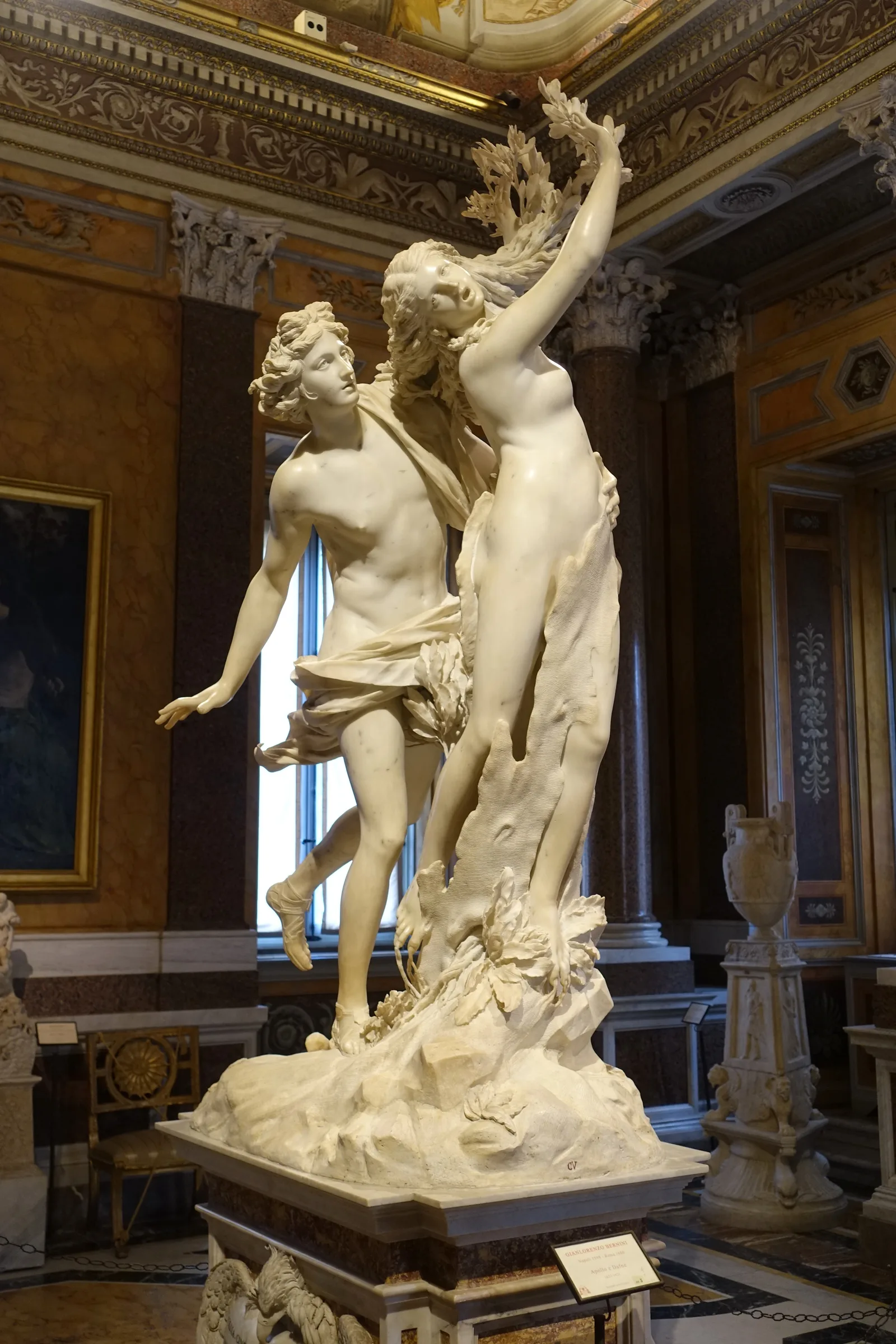
Once a month, the art opens up. On the first Sunday of the month, Rome's state museums and civic museums let you in for free, no ticket: a good chance for the Galleria Borghese, where Bernini and Caravaggio share the rooms, and for the great civic collections.
One warning, though, because here the guides stay quiet. At the Galleria Borghese a reservation stays compulsory always, even on the free Sundays, and entry is limited to timed slots: the free slots sell out well in advance. Book weeks ahead, not days. It is the honest price of the most beautiful thing without a queue.
FREQUENTLY ASKED QUESTIONS
Art in Rome, in brief.
Which works of art can you see for free in Rome?
Plenty, and of the first rank. The free-entry churches of the center hold the Caravaggios of San Luigi dei Francesi, Santa Maria del Popolo and Sant'Agostino, the Mosè of Michelangelo in San Pietro in Vincoli, and Bernini's Estasi di Santa Teresa in Santa Maria della Vittoria.
Do you need to book for the Galleria Borghese?
Yes, always. The Galleria Borghese requires a compulsory reservation and limits entry to timed slots, even on free-admission Sundays. It pays to book weeks ahead, because the slots sell out early.
Where can you see Caravaggio in Rome for free?
In three churches in the historic center, all free to enter and within walking distance of one another: San Luigi dei Francesi (the St Matthew cycle), Santa Maria del Popolo (Cappella Cerasi) and Sant'Agostino (Madonna dei Pellegrini). Often the light on the canvases switches on with a one-euro coin.
Which is the least crowded museum in Rome?
Several escape the queues. The Galleria Doria Pamphilj, a private collection on the Corso, is rarely crowded; the same goes for Palazzo Altemps, near Navona, and for the Centrale Montemartini, in Ostiense, where classical statues sit among the old machinery.
What lies beneath the Basilica di San Clemente?
Beneath the 12th-century medieval basilica lie two older levels: a 4th-century early-Christian basilica and, at the bottom, a 2nd-century mithraeum with a Roman domus. The underground levels are visited with a ticket and a reservation.
When are Rome's museums free?
On the first Sunday of every month, Rome's state museums and civic museums are free to enter. One caveat: for the Galleria Borghese a reservation is still compulsory, even on the free days.
THE GRAND TOUR, FROM ROME
Art is the first stop of the stay.
The Civis Grand Tour starts in Rome. Living it like a local (on foot, past the queues) is easier when you stay within the living fabric of the city. Discover the Rome properties and the Civis Passport, and choose where to set off from.
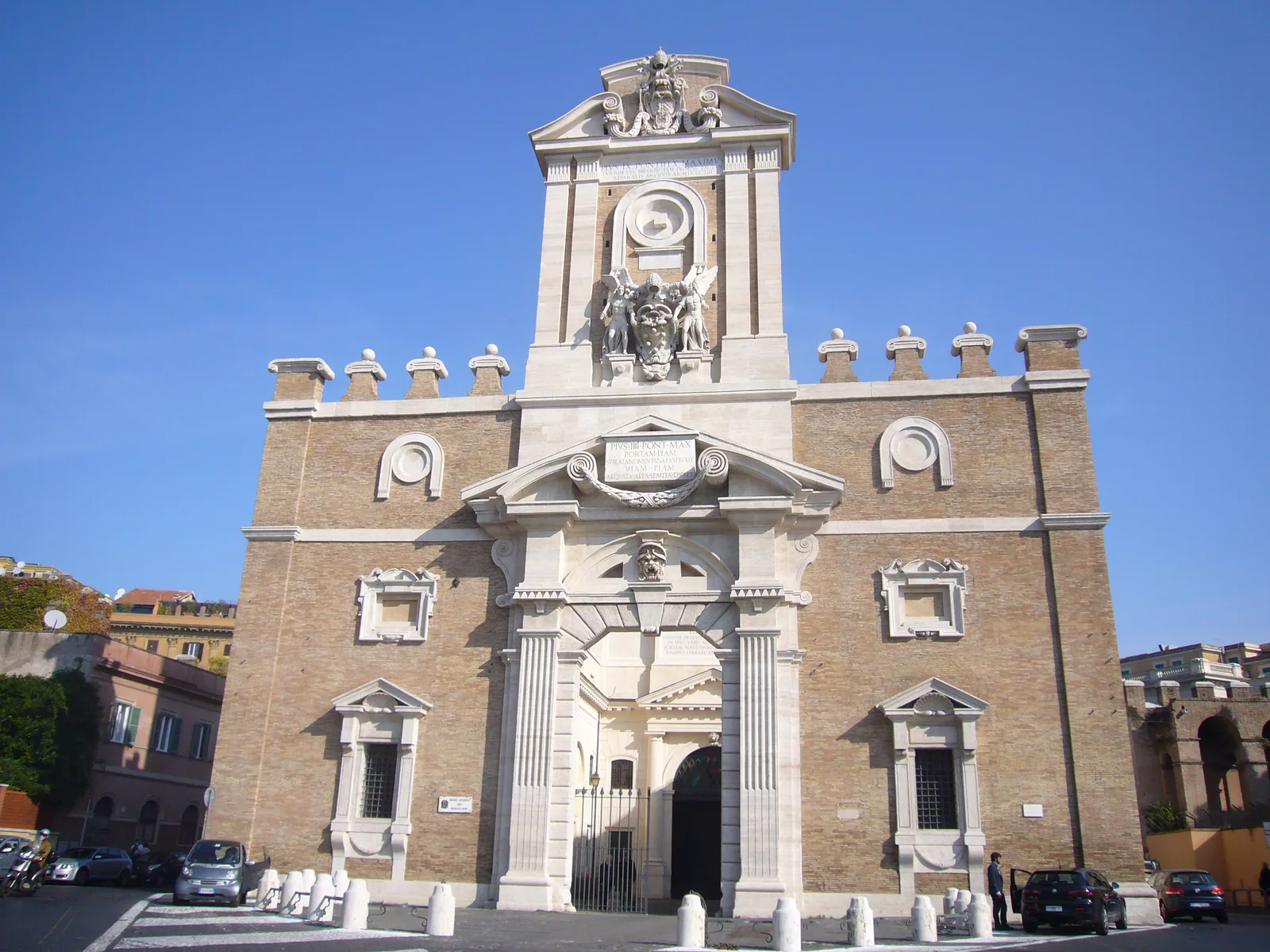
Foto: Lalupa / Wikimedia Commons (CC BY-SA 3.0)