ROME · THE CITY OF THE PEOPLE WHO LIVE IN IT
Rome, now.
Not the postcard one. Today's city lives in the rioni, in the bars that have always been there and in the piazzas that fill up at sunset.
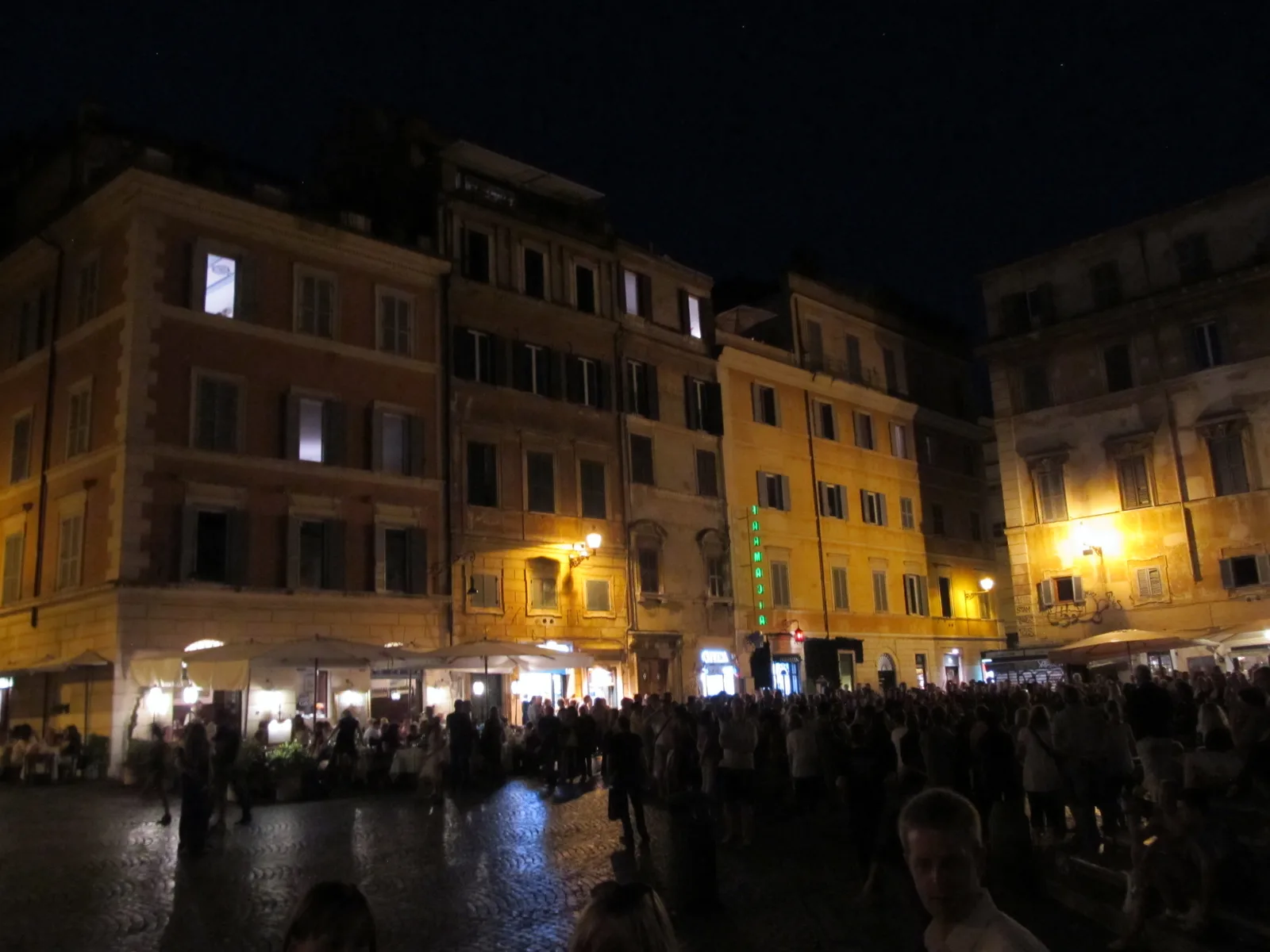
Foto: daryl_mitchell / Wikimedia Commons (CC BY-SA 2.0)
You already know the Rome of the monuments. But there is another city you won't see from the rooftop terraces: the one that does its shopping at the market, drinks its coffee standing at the counter and heads out into the piazza in the evening. This is Rome now, lived by the people who call it home.
This is the map of the rioni where that rhythm beats: Monti in the ancient heart, Pigneto and Ostiense at the edges of the center, Garbatella and Testaccio further south. Not as a tourist, but as a local.
MONTI · THE ANCIENT RIONE
Monti, the oldest rione that stays young.
Just over six hundred meters from the Colosseum, Monti begins: rione number one, the oldest in Rome. Here the streets narrow and change name at every corner: Via del Boschetto, Via dei Serpenti, Via Panisperna. Artisan workshops, wine bars, the odd atelier, and the Romans who still live here. Not a stage set, but a neighborhood that works.
Its center is Piazza della Madonna dei Monti, with the Fontana dei Catecumeni designed by Giacomo della Porta in 1589. On its steps people sit to drink something in the evening, as you would in your own living room. At weekends the Mercato Monti, an urban market running since 2009 on Via Leonina, fills a former garage with vintage finds, prints and small-scale design.
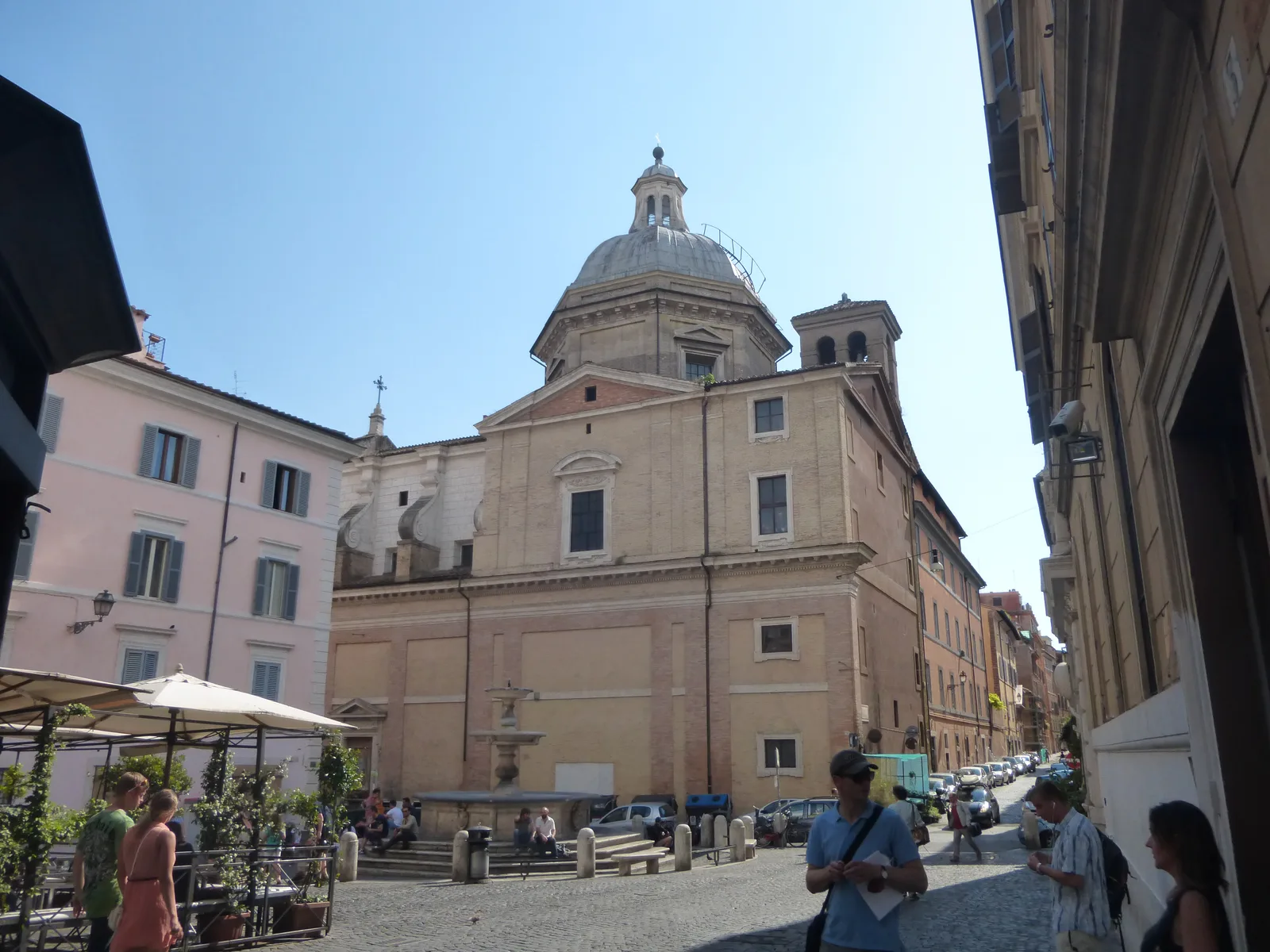
Foto: Lalupa / Wikimedia Commons (CC BY-SA 4.0)
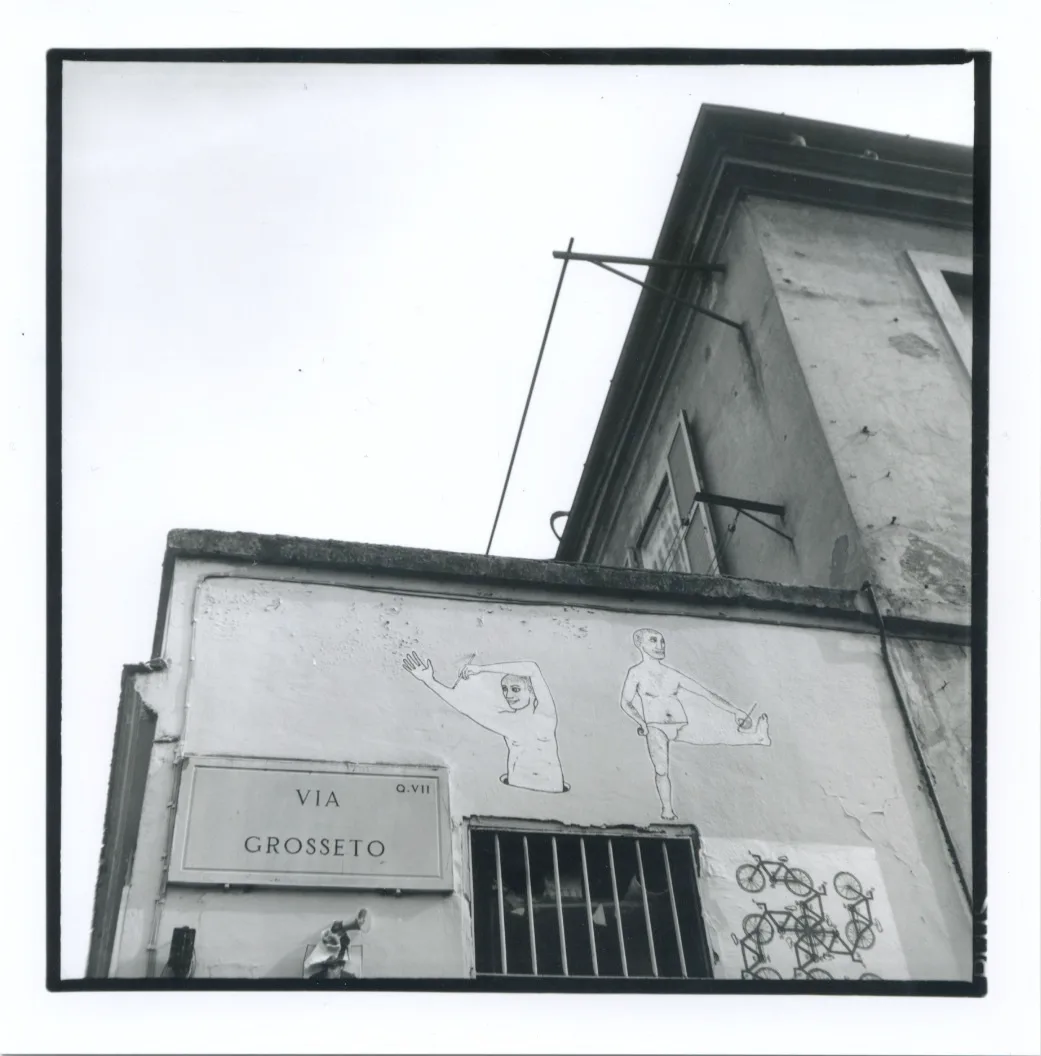
Foto: Manuel Casella / Wikimedia Commons (CC BY-SA 3.0)
PIGNETO · PASOLINI'S BORGATA
Pigneto, Pasolini's Rome turned into an evening out.
East of the station, Pigneto was the working-class borgata where Pier Paolo Pasolini shot Accattone in 1961, among the low houses of Via Fanfulla da Lodi. That world is gone, but the rough grain remains: peeling walls, washing hung out to dry, a pedestrian street with the market in the morning and the tables outside in the evening.
The bar Necci dal 1924, a dairy founded a century ago and a haunt of the director, is still there, become the sign of a neighborhood that now fills up for the aperitivo. Pigneto is the proof that in Rome the past isn't kept under glass: people just go on living inside it.
OSTIENSE · THE MURALS
Ostiense, where the walls get painted.
Around the Gazometro, in the Ostiense rione, old industrial Rome has turned into an open-air gallery. Dozens of murals run across the façades of the buildings, and this is the place where today's city speaks the most contemporary language it has.
The best known is Hunting Pollution by Iena Cruz, on Via del Porto Fluviale: a heron seven storeys tall, painted in 2018 with a varnish that absorbs smog. It is credited as the largest mural made with anti-pollution paint in Europe. You take it in from the pavement, for free, by looking up.
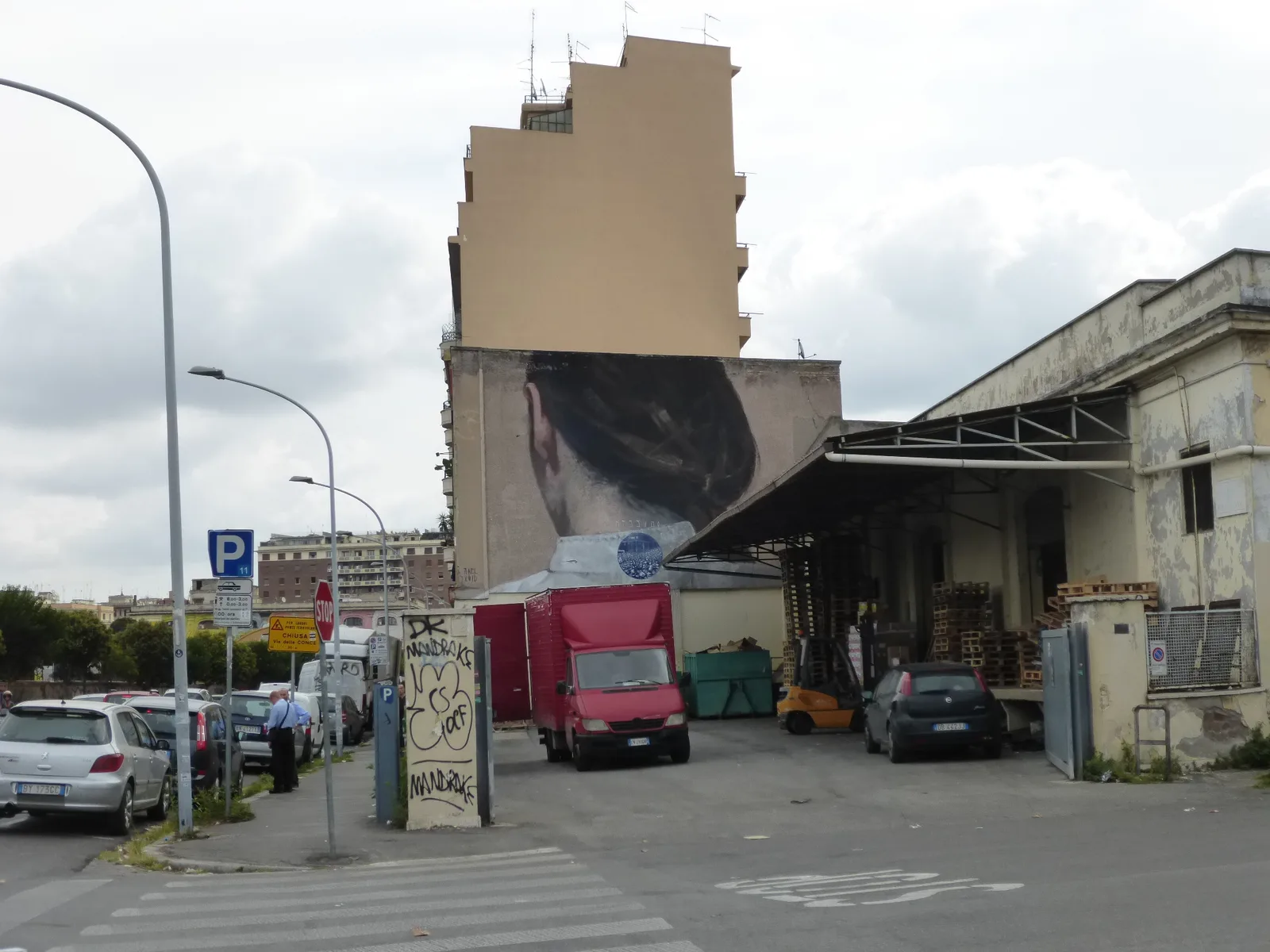
Foto: Lalupa / Wikimedia Commons (CC BY-SA 4.0)
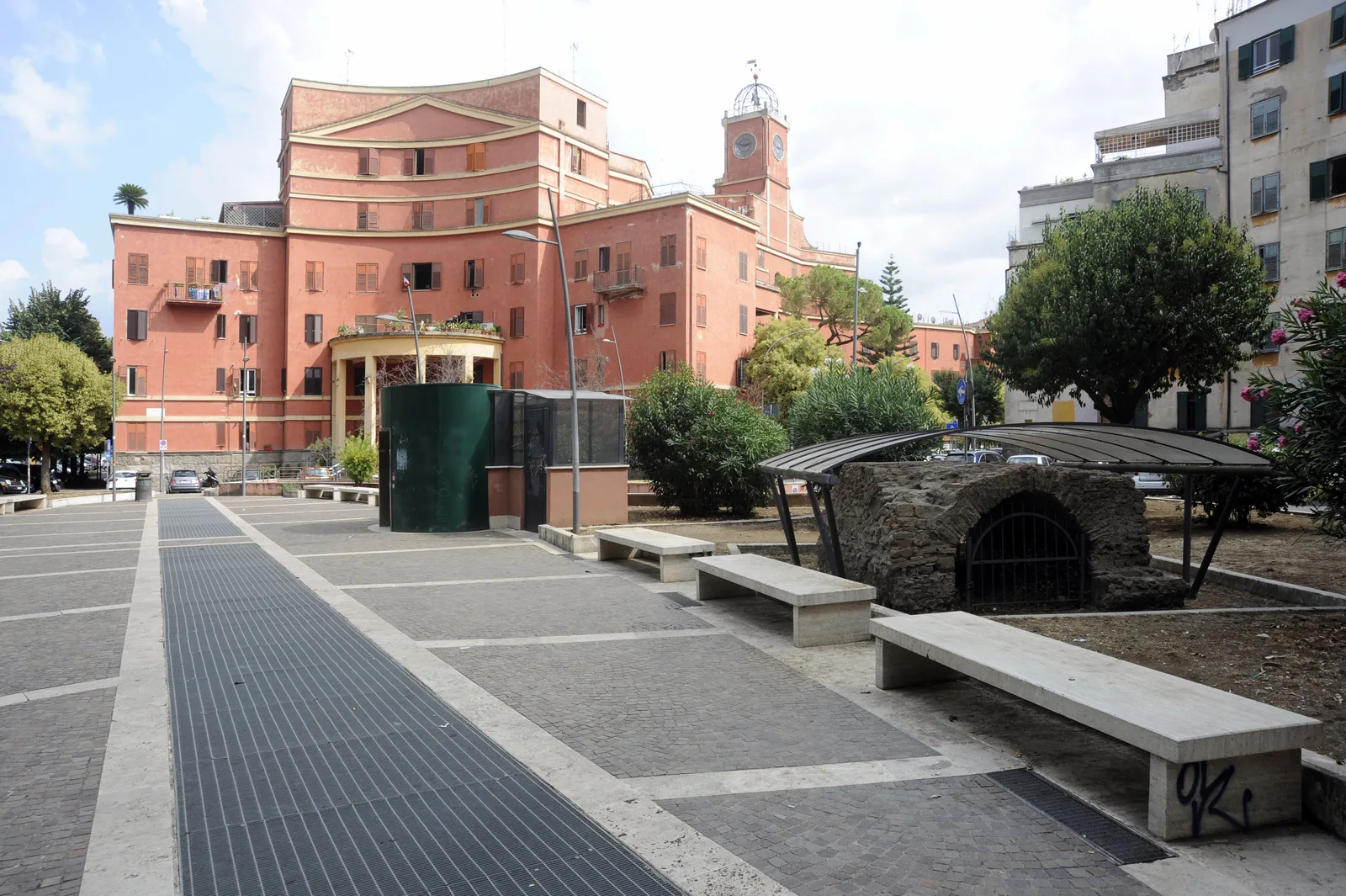
Foto: indeciso42 / Wikimedia Commons (CC BY-SA 4.0)
GARBATELLA · THE GARDEN CITY
Garbatella, living on a courtyard scale.
A little further on, Garbatella was founded in 1920 as a garden borough, conceived on the model of the garden city: low houses gathered around shared courtyards, the lotti, where the washing hung out to dry and the geraniums count for more than the façades. To walk inside it is to step into a Rome you didn't know existed, made of little staircases, arches and silence.
Among the buildings, the Albergo Rosso by Innocenzo Sabbatini stands out, built at the end of the 1920s. Garbatella is a working-class neighborhood that has stayed true to itself, with its osterie and its festa: here the aperitivo happens at the table of a piazza that still belongs to the people who live there.
TESTACCIO · THE RIONE BY THE RIVER
Testaccio, the quarter born on a hill of shards.
Testaccio grew up around a strange mound: the Monte dei Cocci, a hill some thirty meters high made almost entirely of broken Roman amphorae, dumped here over centuries. On top of it they built a working-class rione that has kept its plain-spoken character, of people who call each other by name.
Its heart today is the Nuovo Mercato di Testaccio, opened in 2012 in a bright structure of stalls and kitchens. Not far off, the disused former Mattatoio has become a cultural hub, between exhibitions and a music school. Testaccio remains one of the rioni where Rome is still, quite simply, home.
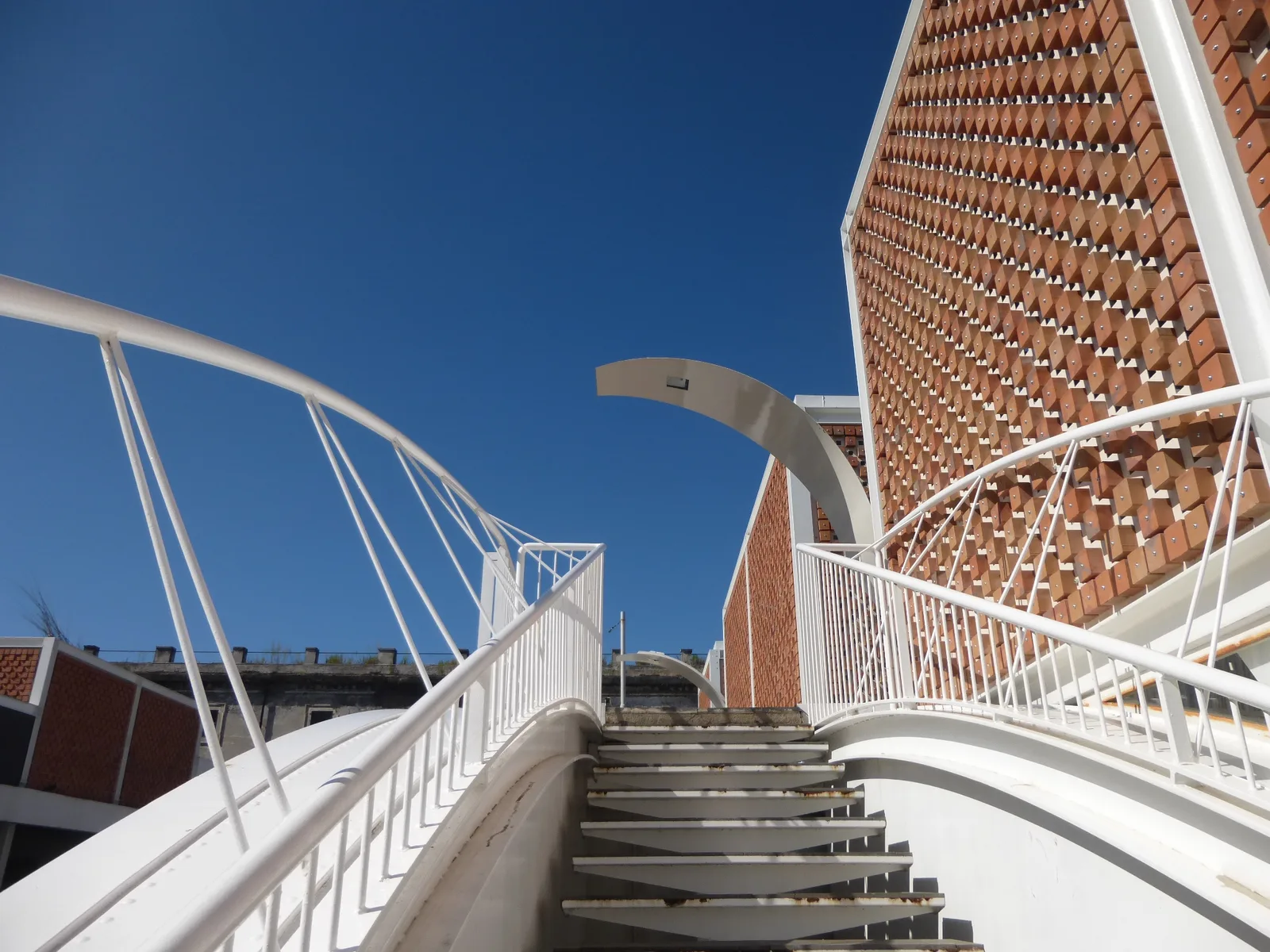
Foto: Lalupa / Wikimedia Commons (CC BY-SA 4.0)
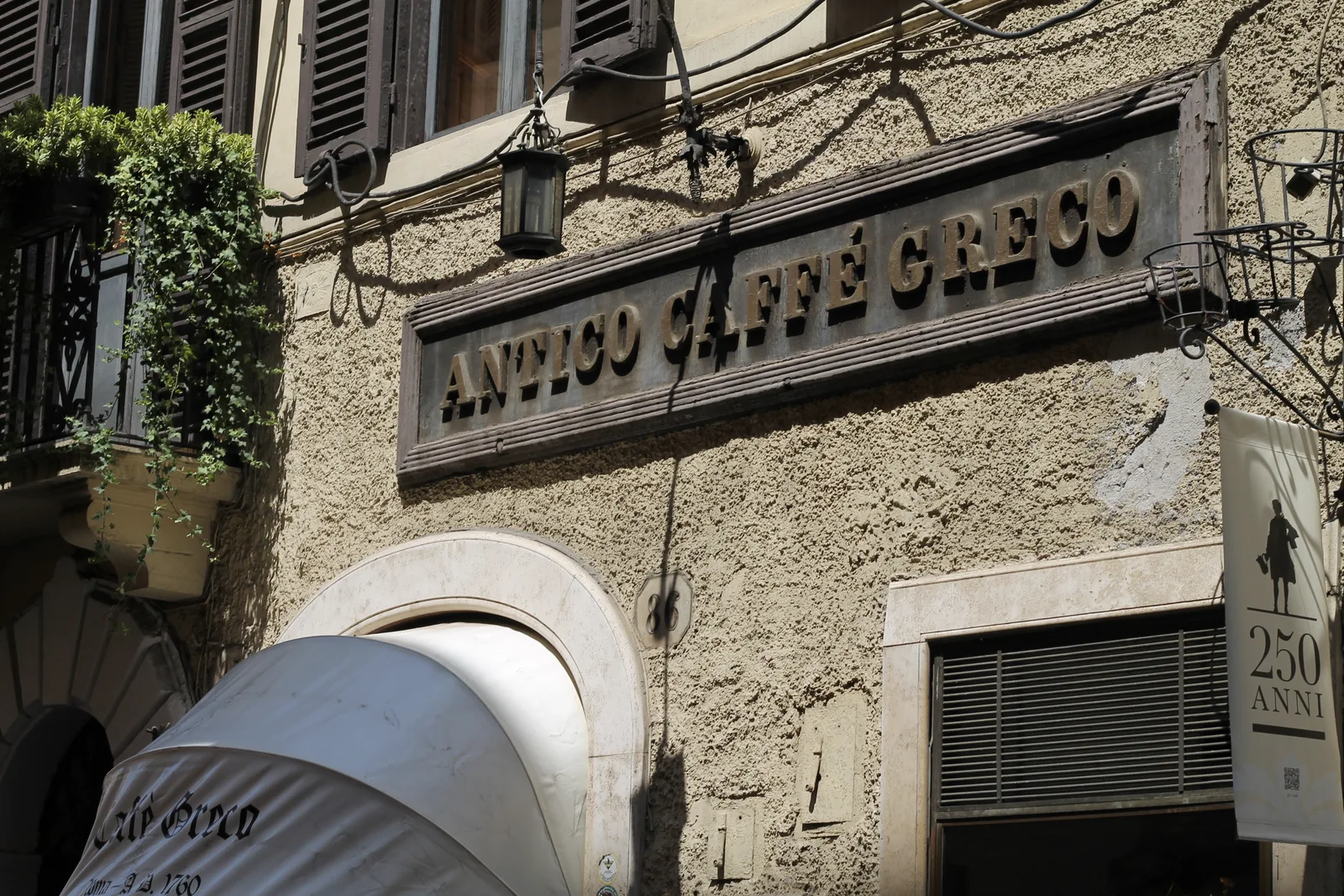
Foto: Elisabetta Stringhi / Wikimedia Commons (CC BY 2.0)
CAFFÈ · THE EVERYDAY RITUAL
Coffee at the counter and the piazza at sunset.
Rome runs on short stops. The Antico Caffè Greco, on Via dei Condotti, has been open since 1760 and remains the oldest café in the city. Sant'Eustachio il Caffè has served its celebrated coffee since 1938 near the Pantheon, where the Casa del Caffè Tazza d'Oro has roasted its beans since 1944. One euro, a sip standing up, and off you go.
Then the sun goes down and the aperitivo begins, which in Rome is not a meal but a ritual: you meet in the piazza with a glass of wine or a spritz and watch the world go by. It is the evening passeggiata, the unhurried art of being out. The simplest and truest way to inhabit the city for a few hours.
FREQUENTLY ASKED QUESTIONS
Rome like a local, in brief.
Which are Rome's liveliest rioni today?
Monti, in the center, is still the oldest rione and today thrives on artisan workshops and life out in the piazza. Beyond the center, Pigneto to the east, Garbatella and Ostiense to the south, and Testaccio by the river are the neighborhoods where today's city tells its story best, among markets, bars and murals.
Which is the oldest café in Rome?
The Antico Caffè Greco, on Via dei Condotti, opened in 1760: it is the oldest historic café in the city. Still going strong are Sant'Eustachio il Caffè, open since 1938 near the Pantheon, and the Casa del Caffè Tazza d'Oro, roasting its beans since 1944.
Where can you see street art in Rome?
Above all in Ostiense, around the Gazometro and on Via del Porto Fluviale, home to Hunting Pollution by Iena Cruz, the largest mural made with anti-pollution paint in Europe, unveiled in 2018. Pigneto, too, has a widespread scene of stencils and murals.
Why is Garbatella famous?
Garbatella was founded in 1920 as a garden borough, modelled on the garden city: low houses gathered around shared courtyards called lotti. It is celebrated for this working-class way of living and for buildings such as the Albergo Rosso by Innocenzo Sabbatini.
What is the Monte dei Cocci in Testaccio?
It is an artificial hill about 35 meters high, made almost entirely of fragments of discarded Roman amphorae, used in antiquity to carry oil. The Testaccio rione grew up on this mound, today alive around its new market and the former Mattatoio turned cultural hub.
What does the aperitivo mean in Rome?
It is the ritual that opens the evening: you meet in the piazza or at the bar around sunset, with a glass of wine or a spritz, and watch the world go by. More than a meal, it is the moment of the passeggiata and of being out, the way Romans close the day as locals.
THE GRAND TOUR, FROM ROME
The living city is the best part of the stay.
Rome is the starting point of the Civis Grand Tour. Living the rioni like a local is easier when you stay in the living fabric of the city. The Lilium Boutique Hotel puts you at Porta Pia, the Imperial Suite Rome in Pinciano: two starting points for the Rome of now. Discover our properties and the Civis Passport.
Foto: Manuel Casella / Wikimedia Commons (CC BY-SA 3.0)