SUNSETS · ROME IN THE GOLDEN HOUR
Rome at sunset, where to look at the city.
There is an hour when Rome changes its skin. The travertine turns to gold, the domes light up, and the people who live here know exactly where to go and watch it.
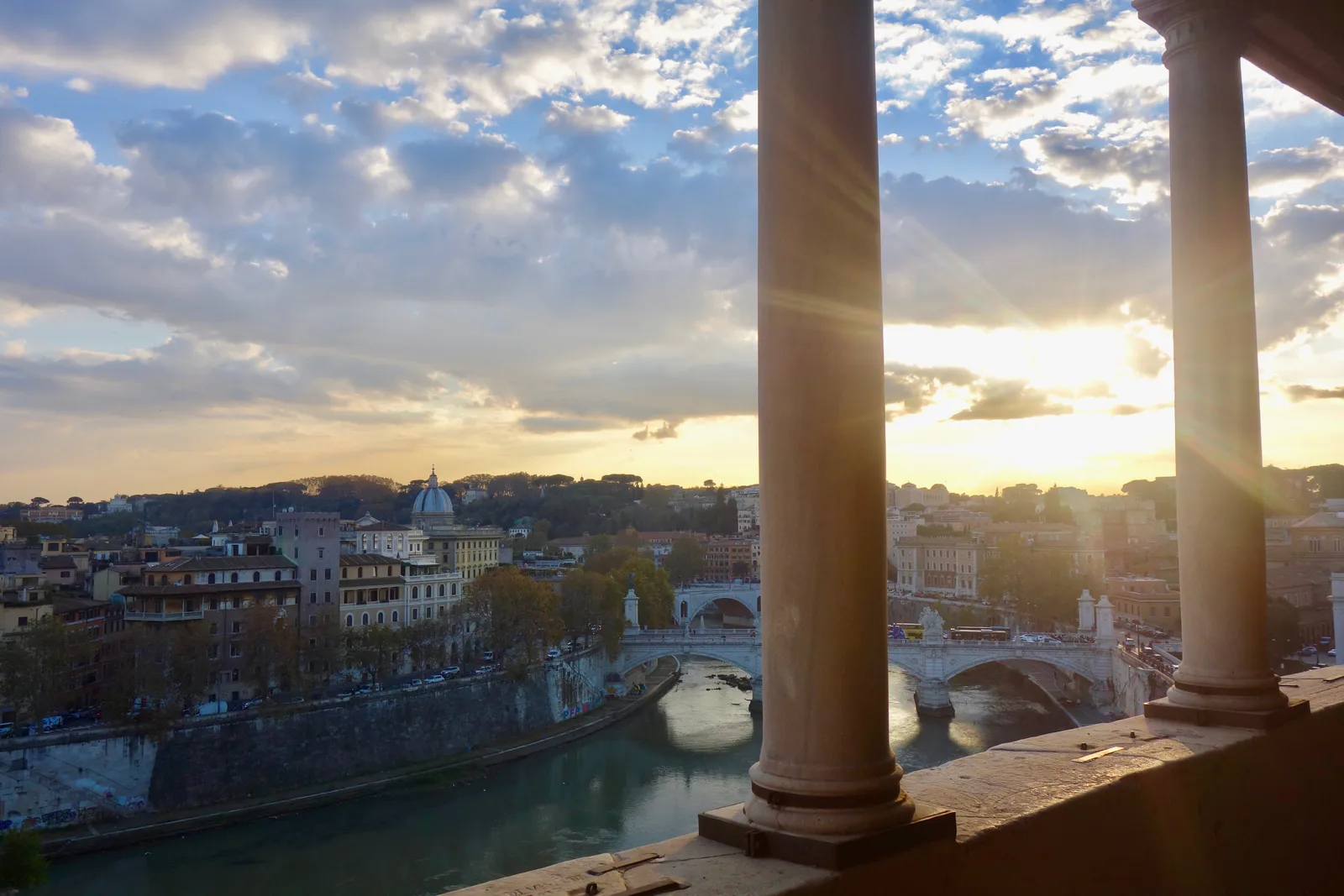
Foto: Sonse / Wikimedia Commons (CC BY 2.0)
Tourists rush to the monuments at the wrong hours, in full daylight. The people who live in Rome wait instead for the half hour before sunset, when the city warms up and empties out: it is the moment when a viewpoint is worth a gallery, and asks for no ticket.
This is Rome in the golden hour the way locals see it, not tourists: the spots to watch it from, what you see from each one and which way the sun falls, and why the season changes everything.
GIANICOLO · THE CLASSIC TERRACE
The Gianicolo, and the city as it lights up.
Climb up to Piazzale Giuseppe Garibaldi, at the top of the Gianicolo, and the view Romans consider the most complete in the city opens up in front of you: the dome of St Peter's, the Pantheon, the Vittoriano, the rooftops of the historic center as far as the Colosseo in the distance. The thing to know is the orientation. Up here the sun stays at your back: you do not watch the disc drop, you watch the city light up, row after row, as the light turns to copper.
Take your time getting there. Coming up from Trastevere you pass the Fontana dell'Acqua Paola, the "Fontanone" that closes the aqueduct commissioned by Paul V, built between 1610 and 1614. Higher up stands the Faro del Gianicolo, the lighthouse given by the Italians of Argentina in 1911. And if you come by at midday, do not jump at the bang: it is the Gianicolo cannon firing a blank salvo every day, a tradition that has run since 1847.
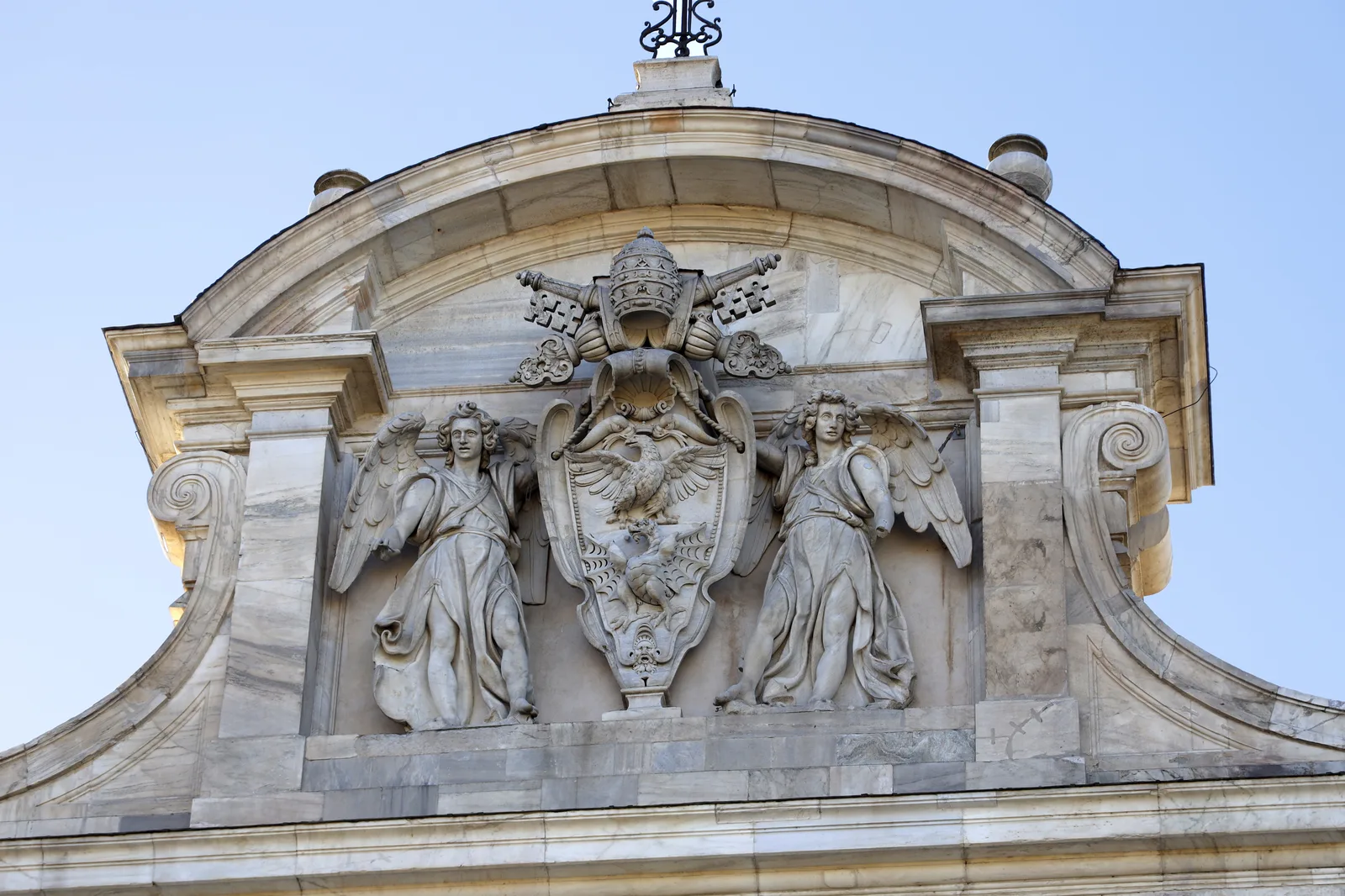
Foto: Fabrizio Garrisi / Wikimedia Commons (CC0)
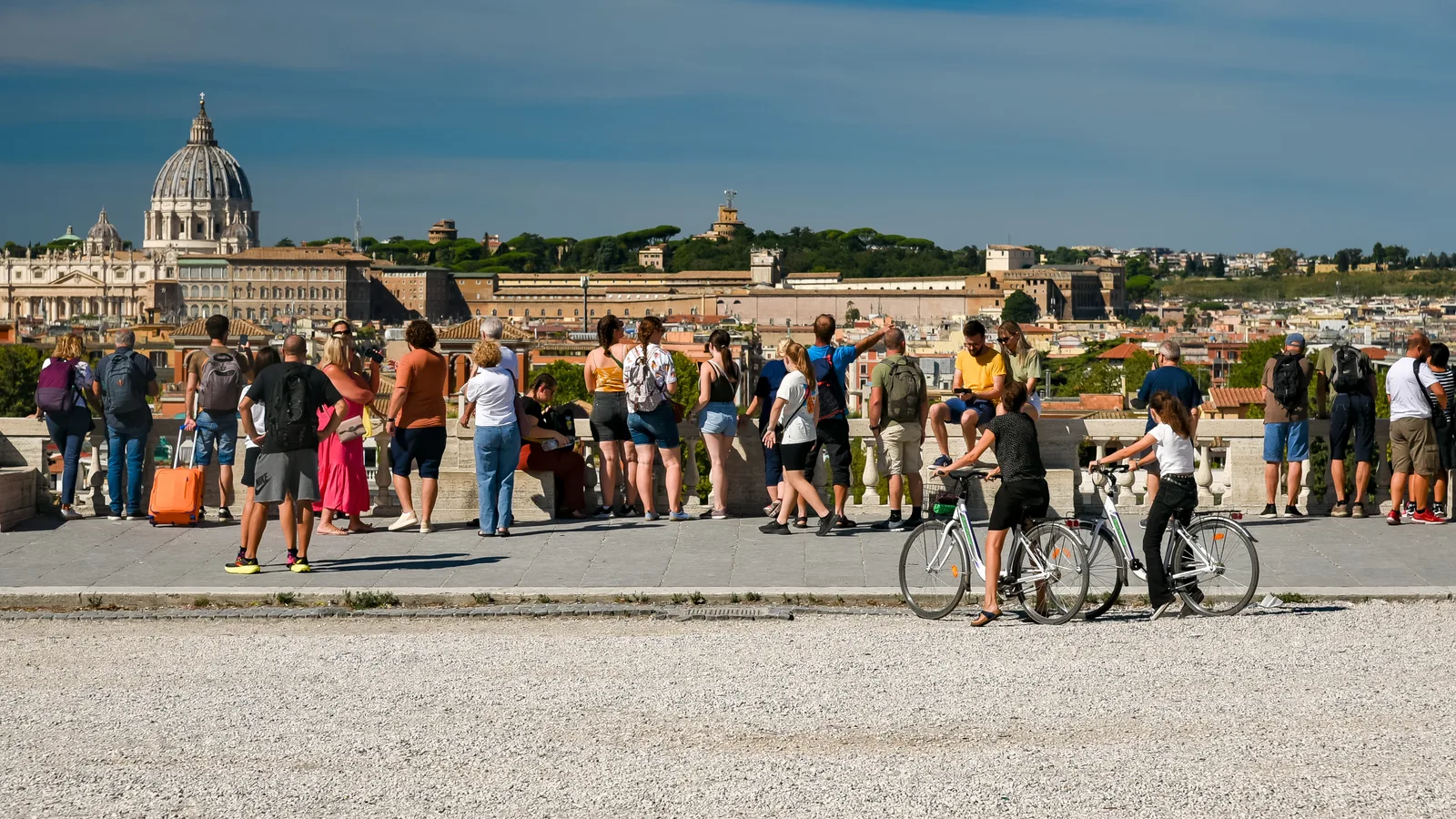
Foto: Jorge Franganillo / Wikimedia Commons (CC BY 2.0)
PINCIO · ABOVE THE POPOLO
The Pincio terrace, above Piazza del Popolo.
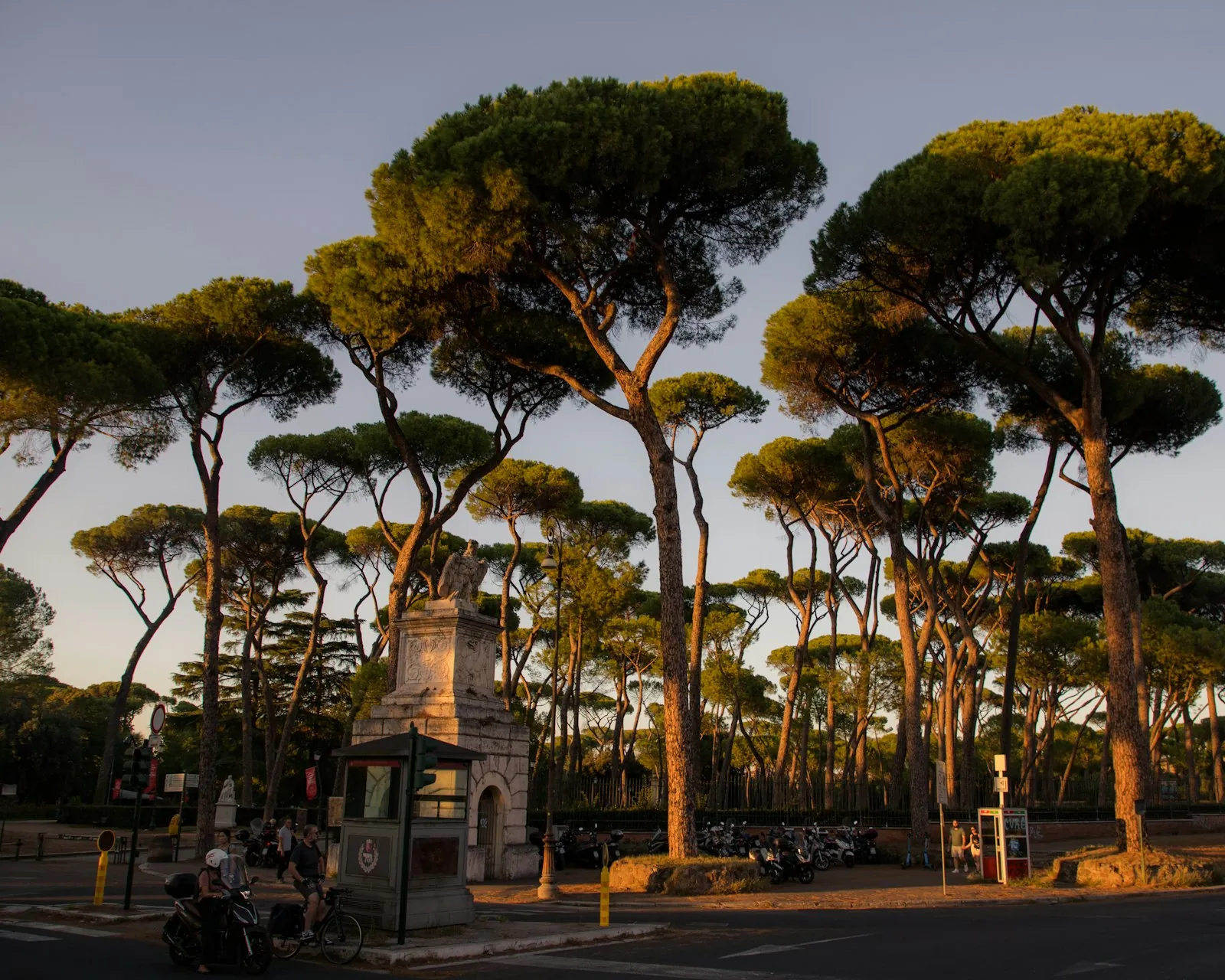
If instead you want the sun in your face, go up to Piazzale Napoleone I, the terrace of the Pincio. Below you is Piazza del Popolo with its obelisk, and beyond it, in line, the dome of St Peter's closing the horizon to the west. This is the viewpoint where the disc of the sun really does drop in front of your eyes, behind the outline of the domes. Giuseppe Valadier laid it out in the early nineteenth century, precisely to frame the square.
The Pincio is the overlooking edge of Villa Borghese, and from here you walk straight into its avenues. For anyone staying at the Imperial Suite Rome, in the Pinciano district next to the villa, it is the walk on your doorstep. Look too for the water clock, the hydrochronometer installed in 1873 that tells the time with two little rocking boats.
AVENTINO · THE GARDEN AND THE KEYHOLE
The Giardino degli Aranci, on the Aventino.
On the Aventino, far from the crush, the Giardino degli Aranci (the orange garden, Parco Savello) has a viewpoint looking out over the Tevere and St Peter's. Raffaele De Vico designed it in 1932, on the site of an old fortress, beside the basilica of Santa Sabina. Among the orange trees, at sunset, the light comes in low from the west and the river turns into a strip of molten metal.
A few steps away is the best kept secret on the hill. In Piazza dei Cavalieri di Malta, redesigned by Giovanni Battista Piranesi in 1765, stands the gate of the Priorato di Malta: look through the keyhole and you will see the dome of St Peter's perfectly framed by a tunnel of hedges. Access is free, and there is often a small, quiet queue of people who know the trick.
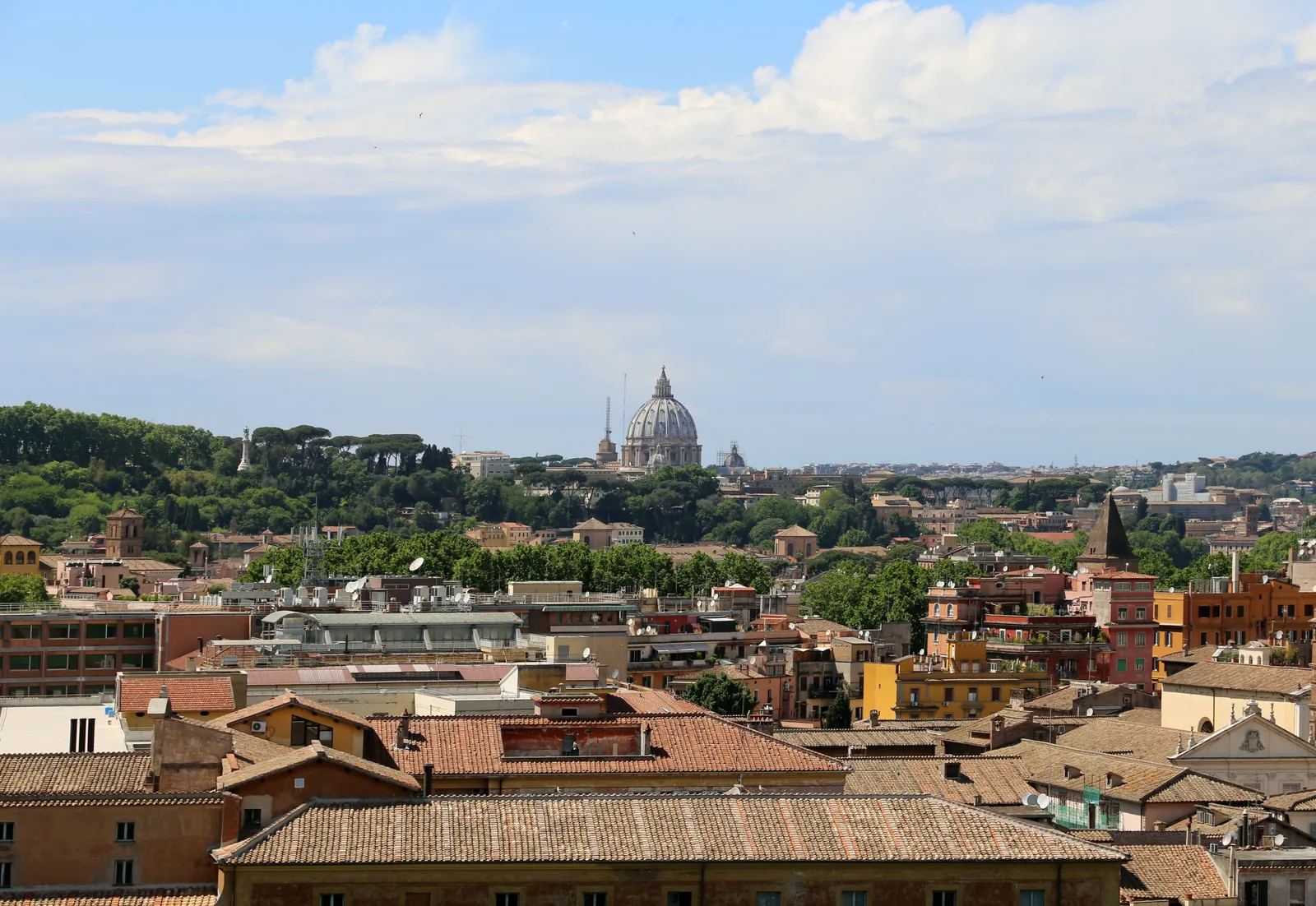
Foto: Sailko / Wikimedia Commons (CC BY 3.0)
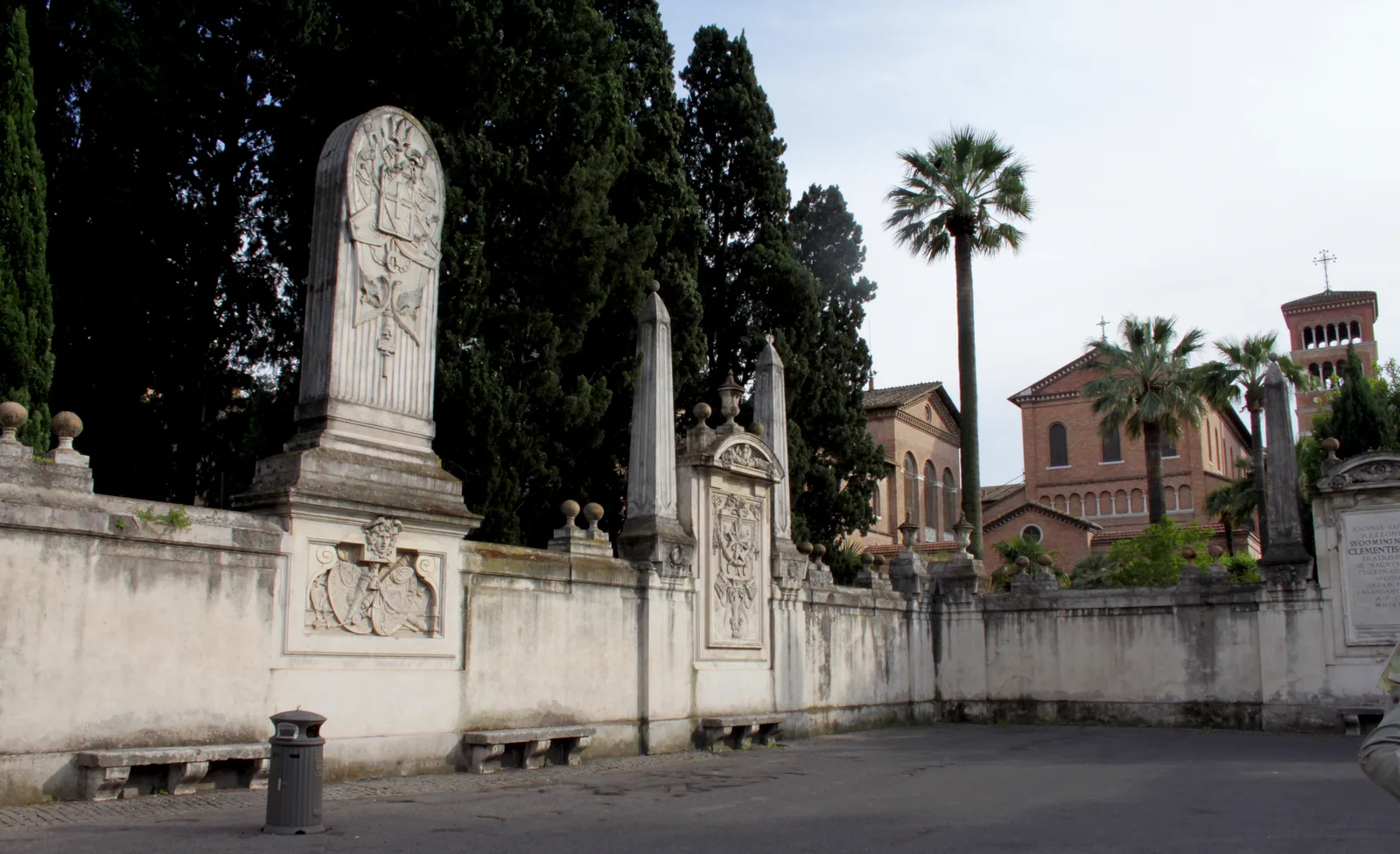
Foto: Stefano Costantini / Wikimedia Commons (CC BY-SA 2.0)
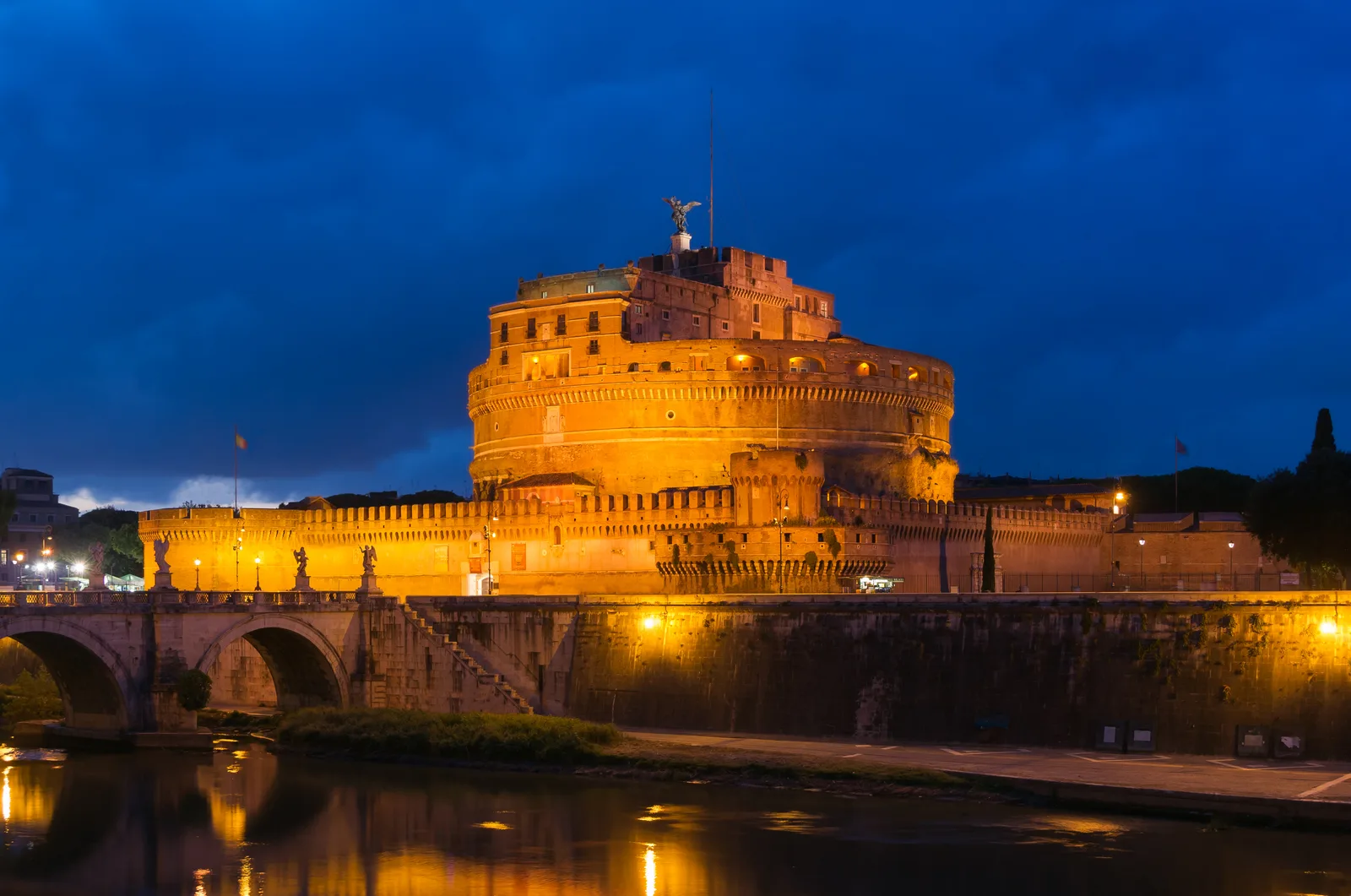
Foto: Jebulon / Wikimedia Commons (CC0)
TEVERE · THE BRIDGES
On the Tevere, when the water turns to gold.
Sunset is not only a matter of terraces. Go down to the Lungotevere, the riverside, and the bridges become the stage. Ponte Sant'Angelo, which Hadrian had built in 134 AD to reach his mausoleum, today Castel Sant'Angelo, carries the angel statues with the symbols of the Passion designed by Bernini and carried out by his workshop. At dusk, with the castle lit up behind it, it is the most striking stretch of the river.
Further upstream, Ponte Sisto, commissioned by Sixtus IV between 1473 and 1479, leads towards Trastevere and its Piazza Trilussa: here the golden light on the water comes without the crowds. And between the two banks, the Isola Tiberina with its ancient bridges remains one of the quietest spots to watch the sky change colour.
DOMES · THE SKY OF ROME
The domes, and where the sun falls.
The skyline of Rome is a profile of domes, and at the center there is always one: the dome of St Peter's, the "cupolone" that Michelangelo designed and Giacomo Della Porta completed in 1590. At 133 meters it is the tallest dome ever built, and in the golden hour it becomes the compass of every view: from whichever terrace you look, you find it standing as the backdrop.
And here is the insider detail, the one that changes the photo. In Rome the sun does not always set in the same spot. In summer it drops towards the north-west, in winter it slides to the south-west, and only at the equinoxes does it go due west. That is why the Pincio and the Aventino, both facing west, give you the disc behind the domes, while the Gianicolo, facing the city, gives you the light on the rooftops. Choose your viewpoint by what you want to see.
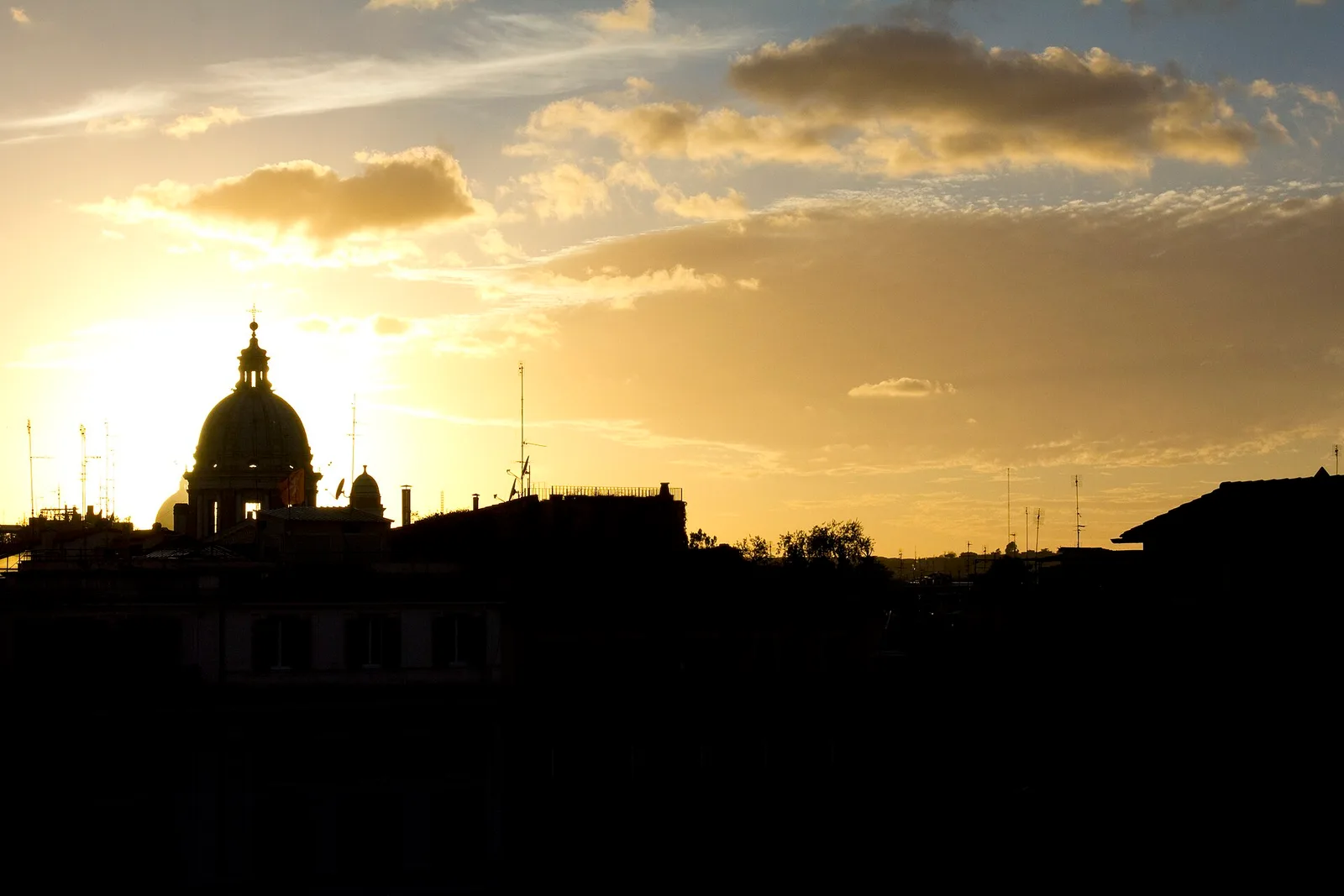
Foto: Weldon Kennedy / Wikimedia Commons (CC BY 2.0)
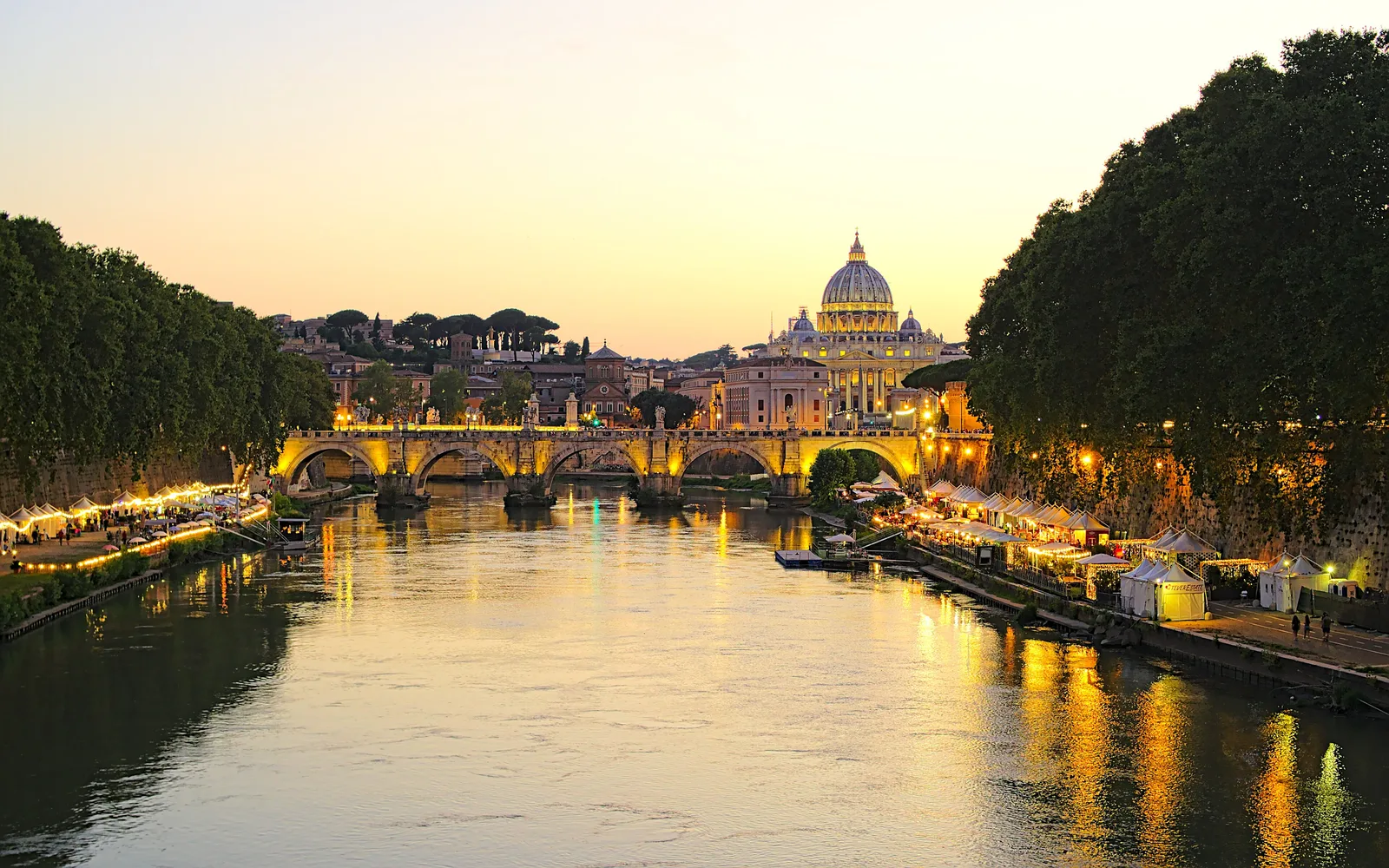
Foto: Thomas Fabian / Wikimedia Commons (CC BY-SA 2.0)
THE HOUR · WHEN TO GO
The timing, which changes with the season.
The last piece of advice is the simplest, and the one visitors get wrong most often: the timing. In Rome sunset shifts by more than four hours between summer and winter. In late June the sun drops around 8:48 pm, with daylight saving time, and you have a very long evening to make your way up at ease. In December, instead, the light is gone as early as 4:45 pm: sunset becomes an afternoon appointment.
There is only one rule. Reach the viewpoint at least half an hour before the time of sunset, and stay on after it too, for the blue hour that follows. It is in that half hour of passage that Rome is at its best, and that you recognise it the way the people who live here recognise it: not a monument to photograph, but a city changing light before your eyes.
FREQUENTLY ASKED QUESTIONS
Rome at sunset, in brief.
Where is the best place for sunset in Rome?
It depends on what you are after. From the Pincio terrace and the Giardino degli Aranci on the Aventino you watch the sun drop beyond the dome of St Peter's. From the Gianicolo, instead, the sun stays at your back and the city lights up in front of you in golden light.
What time does the sun set in Rome?
It changes a lot with the season. In late June the sun sets around 8:48 pm, with daylight saving time; in December it drops as early as 4:45 pm. For the golden hour it is best to reach the viewpoints at least half an hour before sunset.
What do you see through the keyhole of the Priory of Malta?
Looking through the keyhole of the gate of the Priory of Malta, on the Aventino, you see the dome of St Peter's perfectly framed by a tunnel of hedges in the inner garden. The square and the gateway were redesigned by Giovanni Battista Piranesi in 1765. Access is free.
Why does the cannon on the Gianicolo fire?
The cannon on the Gianicolo fires a blank salvo every day at exactly noon, to mark the hour. The tradition was started by Pope Pius IX in 1847; the cannon has been on the Gianicolo since 1904 and, after the wartime pause, went back to firing in 1959.
Where can you watch the sunset over the Tevere in Rome?
Along the Lungotevere and from the bridges in the center. Ponte Sant'Angelo, with the angels designed by Bernini and Castel Sant'Angelo behind it, is the most striking stretch at dusk; Ponte Sisto, towards Trastevere, gives you golden light on the water without the crowds.
Do you have to pay to go up to the Gianicolo or the Pincio?
No, they are public and free. The Gianicolo terrace, the Pincio one and the Giardino degli Aranci on the Aventino are all open access. It is one of the loveliest and simplest ways to live Rome like a local.
THE GRAND TOUR, FROM ROME
The right sunset starts where you sleep.
Every Civis Grand Tour begins in Rome. The Imperial Suite Rome is in the Pinciano district, a step from the Pincio and Villa Borghese; the Lilium is at Porta Pia. Choose where to set off from, and the golden hour becomes the walk on your doorstep.